
Plastic Mulch vs Landscape Fabric: Which Fits Your Growing System?
Comparing plastic mulch vs landscape fabric starts with the growing system: where the cover will sit, how water will reach the roots, and what happens when the crop finishes. A material that works well on a drip-irrigated vegetable bed may be a poor choice for a nursery aisle.
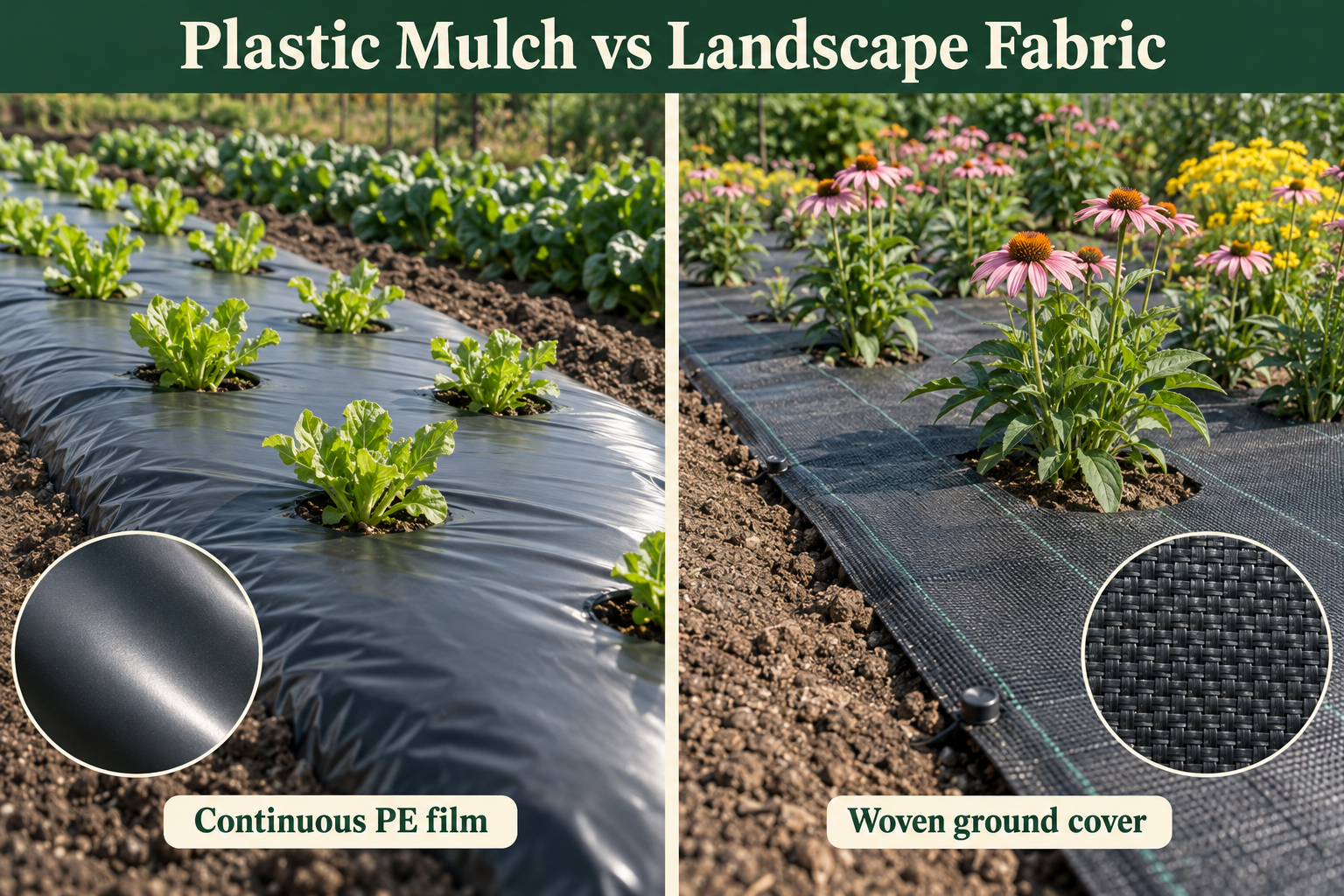
The short answer: agricultural PE mulch film is a continuous sheet commonly used on prepared crop beds with planned irrigation and removal. A specified woven ground cover can suit managed beds, nursery areas or walkways where its water passage, handling and potential reuse match the job. Many landscape fabrics are plastics too. Neither category is automatically weed-free, maintenance-free or suitable for every growing system.
This guide compares crop-bed film with ground-contact fabrics. It does not compare fabric with wood-chip mulch, or specify an underlayment for roads, drains or building foundations. Explore the plastic mulch film range when your project calls for film.
What is the difference between plastic mulch and landscape fabric?
PE mulch film is a thin polyethylene sheet. An intact, nonperforated sheet does not let rainfall pass directly through it; water enters through an irrigation system, openings or uncovered soil. Planting holes and deliberately perforated films change that water pathway.
Woven ground cover consists of interlaced tapes or yarns. Agricultural products are often polypropylene (PP), but polyethylene (PE) versions also exist. Weave, coatings and any backing affect behavior. “Woven” identifies construction, not a guaranteed infiltration rate or service life.
Nonwoven landscape fabric uses bonded or entangled fibers rather than a regular weave. Some products combine layers. “Nonwoven” does not automatically mean waterproof, and a filtration textile is not automatically a suitable crop-bed cover.
Ask for the actual polymer, construction and intended use. Film thickness in microns or mils and fabric mass per area in g/m² describe different properties; neither measurement alone establishes weed control or durability. Use the mulch thickness guide when reviewing a film specification.
Plastic mulch vs landscape fabric: a practical comparison
Use the table to shortlist a system. Confirm the proposed grade before converting a general material preference into an order.
| Decision | Continuous PE mulch film | Woven ground cover |
|---|---|---|
| Typical starting point | Prepared planting beds with a defined crop period, irrigation and removal plan. | Managed crop beds, nursery floors or aisles where the selected grade fits access and handling. |
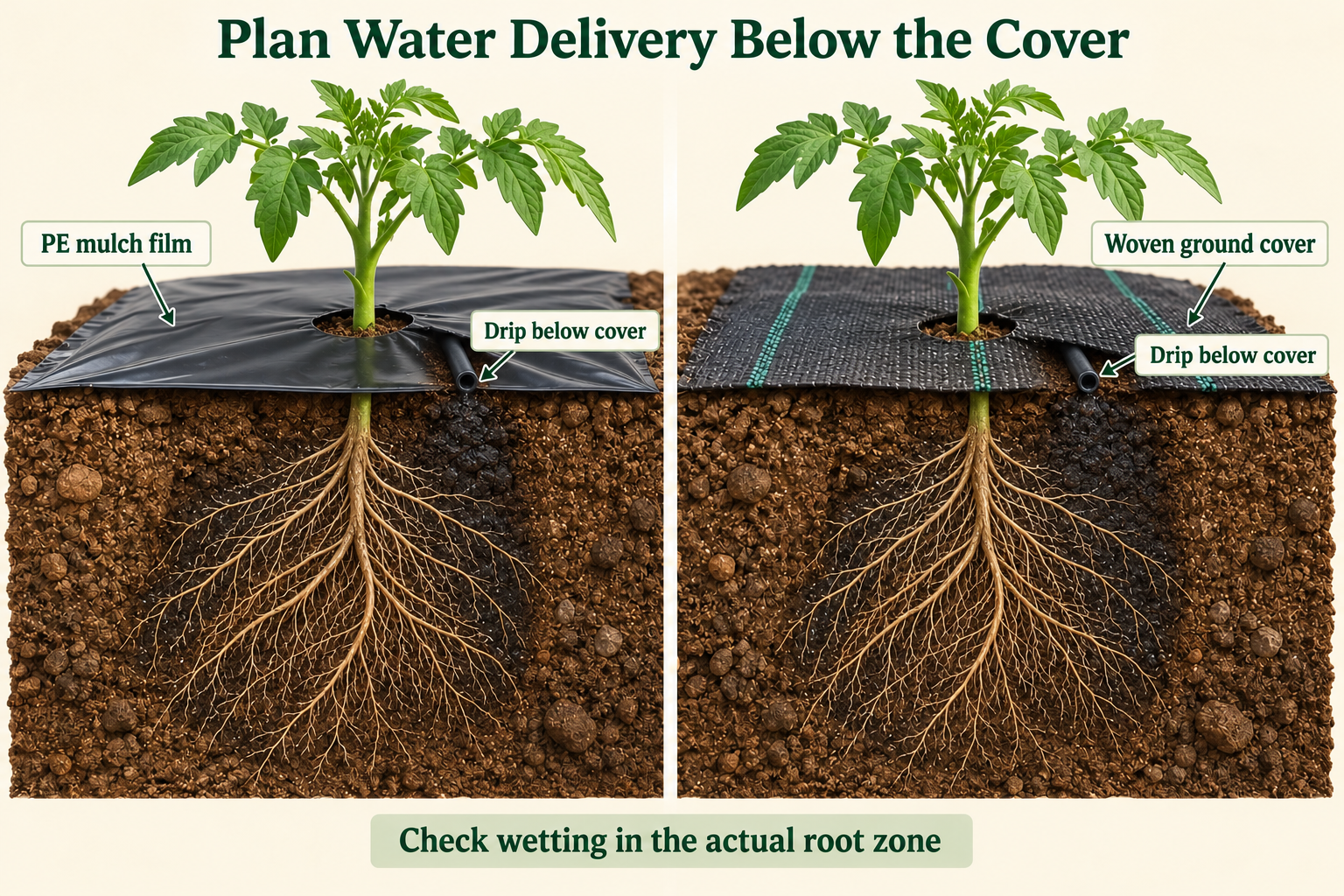
| Water pathway | Plan water delivery below the intact sheet; do not count on rain passing through it. | Check actual water passage, runoff and soil wetting. Under-cover drip can still be appropriate. |
| Temperature objective | Select color and installation for the crop and season. | Check the specific cover in the intended season; black fabric can also become hot. |
| Weed escape points | Planting holes, loose edges, damage and weeds capable of piercing film. | Openings, joins, edges, damage and weeds rooted in accumulated debris. |
| Installation fit | Match bed shape, anchoring allowance and film-laying equipment. | Plan fixings, joins, cut-edge treatment and access to irrigation or soil. |
| Next crop | Evaluate condition and the crop plan; arrange recovery and replacement as needed. | Reuse depends on intact material, useful hole spacing and practical cleaning, storage and relaying. |
| Purchase specification | Material, color, single-wall thickness, roll dimensions and hole drawing. | Polymer, textile construction, mass per area, dimensions and relevant performance evidence. |
Nonwoven and composite fabrics need their own specification review; do not assume the woven-cover column describes every product sold as landscape fabric.
Example purchasing decision: a grower renewing vegetable beds each crop may prioritize film-laying compatibility and removal. A flower grower repeating a hole pattern may prioritize a recoverable textile. A nursery manager may prioritize drainage and access beneath containers. One farm can therefore justify different covers in different zones.
Does landscape fabric let water through?
Many landscape fabrics are designed to pass water. That answers a material question, but not whether enough water reaches a particular root zone. The proposed fabric, surface slope, sediment, soil infiltration and irrigation method need to work together.
Oregon State University’s blueberry guidance gives a useful crop-specific example: it places drip lines under weed mat because water may run off before penetrating, especially on mounded beds. This does not specify every crop’s irrigation design; it shows why a “water-permeable” label is not enough.
Check the installed system, not only a loose sample
- Map water entry. State whether the crop relies on drip, overhead irrigation, rainfall or a combination.
- Inspect the covered bed. Run the intended irrigation and check moisture at representative root-zone positions, including the bed ends.
- Look for bypass. Observe runoff at shoulders, joins and low points instead of assuming all applied water stays in the bed.
- Retain access. Plan how staff will find blocked emitters or repair tubing after the cover is installed.
A simple wetting check helps assess installation fit. It is not a laboratory permeability result or a substitute for crop-specific irrigation scheduling. Test the drip system before covering it; see the plastic mulch installation guide for the film workflow.
Which controls weeds better?
Identify the weed problem before choosing a cover. Opaque coverage can suppress many weeds, but uncovered planting holes and edges still need attention. Clear film does not have the same light-blocking function as opaque black film.
UC Integrated Pest Management notes that nutsedge can penetrate polyethylene film. Some landscape fabrics can help suppress it in suitable applications, but that is not evidence that every woven or nonwoven product stops established perennial weeds.
Illinois Extension also describes weeds establishing in material accumulated above fabric. A clean cover at installation can therefore need later maintenance even if the original sheet remains intact.
For a trial, record the weed species and where escapes occur: through the material, through planting openings, along joins or in debris on top. Those observations help distinguish a material problem from an installation or maintenance problem. Avoid approving either option against an undefined promise of “complete weed control.”
Match the cover to the crop and planting season
Black plastic vs landscape fabric is not a fixed temperature comparison. Color, contact with soil, moisture, weather and canopy development affect the result. NMSU’s commercial mulch guidance explains the importance of film color and soil contact; SDSU cautions that black fabric can become hot during summer.
What a field study can tell us: a Washington State University study published in 2022 compared PE film, woven PE weed mat and soil-biodegradable film in a strawberry–lettuce system. All covers had drip underneath. The tested mulches provided comparable weed suppression, and lettuce head weight did not differ significantly. This was evidence for those materials and conditions, not a universal winner.
The study’s temperature observations were not replicated across all blocks, and the sensor treatments differed in crop rotation. They should not become a general temperature advantage or a performance claim for another supplier’s product.
Set the trial objective before ordering: earlier establishment, avoidance of excessive root-zone heat, or another defined crop requirement. Keep the planting date and irrigation schedule with the observations. For detailed film options, use the mulch color selection guide.
Reuse is a handling plan, not a fixed number of years
SDSU describes reusing landscape fabric when it remains intact, with removal, debris cleaning, storage and labeling. A reusable sheet only creates practical value when it can be recovered and used in the next layout.
- Before purchase: check whether future crops will use the same bed width and planting pattern.
- At lifting: record tears, enlarged openings and damaged edges; separate pieces that need repair or retirement.
- In storage: keep pieces identifiable by dimensions and hole pattern, with handling that follows supplier guidance.
- Before relaying: inspect condition again and include the labor needed to fix and secure each piece.
Conventional PE film and conventional PP or PE ground cover should not be treated as soil-biodegradable materials. Plan recovery before deterioration makes collection difficult. Recycling depends on the receiver’s acceptance conditions; mixing fabric, film, drip tape and contaminated debris can complicate that route.
For a film removal plan, see plastic mulch removal and disposal. If soil incorporation is part of the proposal, evaluate an appropriately documented soil-biodegradable mulch option separately.
Compare costs over the same area and period
A roll price or price per kilogram cannot settle the comparison. Define the same usable covered area and evaluation period, then include the work needed to keep each system functioning.
| Cost group | What to include |
|---|---|
| Delivered material | Roll quantity, freight, agreed delivery basis, overlaps, anchoring allowance and cutting losses. |
| Installation | Labor, equipment, fixings, hole preparation and changes to irrigation access. |
| In-season work | Weed escapes, repairs, inspections and irrigation maintenance attributable to the system. |
| Between crops | Lifting, separation, cleaning, storage, inspection, relaying and replacement of damaged pieces. |
| Final recovery | Collection, transport and the confirmed recycling or disposal route. |
Comparison basis: total evaluated cost divided by the usable area served over the stated period. If calculating cost per covered crop cycle, use the sum of the areas actually served in those cycles and state the unit clearly.
For a forward budget, test a conservative reuse case alongside the planned case. Label future reuse counts as assumptions. Do not divide a fabric purchase by several hoped-for seasons while charging film for only one crop, or claim a yield benefit that has not been established for the project.
What should a buyer approve before a bulk order?
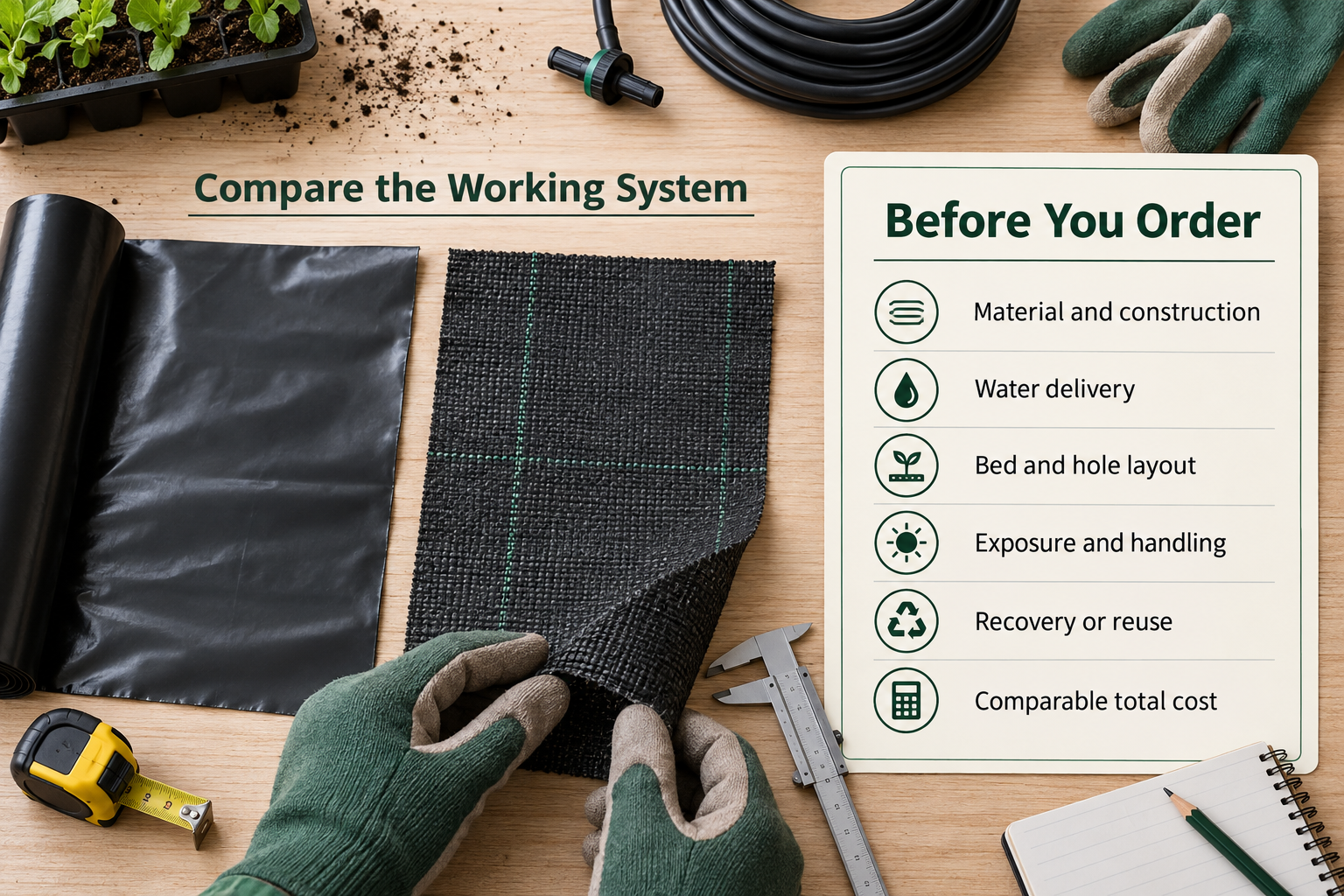
Use a named sample and a written comparison record. The following is a proposed purchasing checklist, not a certification or a claim that the materials have already passed testing.
- Sample identity: supplier, product code, polymer, construction, color and batch or sample reference.
- Dimensions: finished width and length, film thickness or fabric mass per area, measurement method and agreed tolerances.
- Layout: bed profile, anchoring allowance, joins and a drawing of planting-hole positions.
- Water delivery: intended irrigation, access points and observed root-zone wetting during a representative installation.
- Exposure and handling: crop duration, location, wind exposure, relevant contact or traffic, and retrieval method.
- Performance evidence: the applicable test report or trial information, the actual grade tested and agreed acceptance criteria.
- End of use: recovery responsibility, reuse inspection and local receiver requirements.
A short sample check can expose fit and handling problems. Longer claims about weathering, crop response or repeated use require evidence covering those conditions and durations.
Ready to compare a PE mulch-film quotation?
TIAN FENG supplies PE mulch film. If film fits your growing system, review the black mulch film product page and send the project information below. Fabric is discussed here as a comparison material; this guide does not establish a fabric supply offer.
Information to include in your inquiry
- Crop and use: what you grow and where the film will be installed.
- Location: growing region and delivery destination.
- Timing: planting date, required coverage period and target arrival date.
- Irrigation: drip layout or the other planned water-delivery method.
- Bed dimensions: bed top, shoulders, length and anchoring arrangement; attach a drawing if available.
- Quantity: intended covered area or roll requirement, clearly stating which you mean.
- Known specifications: color, thickness, roll width and length, plus any hole pattern.
- Approval and delivery needs: sample review, packing and the quotation delivery basis you need compared.
If a specification is undecided, identify it as “to be reviewed” rather than guessing. Ask the quotation to list its assumptions, available options and any items that still need confirmation.
Plastic mulch and landscape fabric FAQ
Is landscape fabric made of plastic?
Many conventional products use polypropylene or polyethylene. Others have different fibers or combined layers. Check the composition; a fabric appearance does not establish that a product is plastic-free.
Is landscape fabric water permeable?
Many grades are designed to pass water, but the rate and installed behavior vary. Verify the proposed grade and check root-zone wetting. Permeability does not guarantee that rainfall or overhead irrigation supplies the crop adequately.
Can I use landscape fabric for vegetables?
Yes, suitable fabrics are used in managed vegetable and flower systems. Confirm hole layout, irrigation, seasonal temperature fit, weed maintenance and recovery. Advice about fabric buried permanently under ornamental mulch describes a different use.
Should drip irrigation go under the fabric?
It can. Under-cover drip is one way to deliver water to the bed while retaining a surface cover. Plan emitter positioning and repair access for the actual crop, soil and irrigation design.
Which lasts longer: plastic mulch or woven ground cover?
A suitable fabric may support repeated use, but category names do not establish a fixed lifespan. Compare the actual grades, exposure, damage, hole-layout compatibility and recovery work. Ask what conditions any supplier life statement covers.
Is reusable landscape fabric biodegradable?
Reusable and biodegradable describe different things. Conventional PP or PE fabric is not soil-biodegradable simply because it can be reused. Evaluate any biodegradability claim against evidence for the specific material and disposal environment.
Can one farm use both film and fabric?
Yes. Different zones can have different requirements. Assess planting beds, access aisles and container areas separately, including water movement, handling and end-of-use plans.
What should I send for a mulch-film quote?
Send the crop, region, coverage period, irrigation plan, bed dimensions, quantity and known roll specifications, along with the delivery destination and timing. A bed or hole-layout drawing helps resolve assumptions before production.
References
These sources provide research and extension guidance for the applications discussed above. Their trial conditions and specifications are not specifications for TIAN FENG products.
- Washington State University researchers, Wang et al. (2022), Frontiers in Sustainable Food Systems. Soil-biodegradable mulch is an alternative to non-biodegradable plastic mulches in a strawberry-lettuce double-cropping system.
- New Mexico State University Cooperative Extension. Commercial Vegetable Production With Plastic Mulches, Guide H-245.
- Oregon State University Extension. Growing blueberries in your home garden, EC 1304; mulching and irrigation guidance.
- University of California Statewide IPM Program. Nutsedge; weed-management and mulching guidance.
- University of Illinois Extension. Common mulches used in the vegetable garden.
- South Dakota State University Extension. How to Prepare Landscape Fabric for In-row Weed Control for Flower and Vegetable Production.