
Plastic Mulch for Tomatoes: Planting Season, Bed Layout and Film Selection
Plastic mulch for tomatoes should be selected around the planting season, production system and bed layout. A film that suits a cool establishment period may be a poor choice when additional root-zone heat is unwanted. The order also needs to fit the planting equipment, irrigation route, crop duration and end-of-season removal plan.
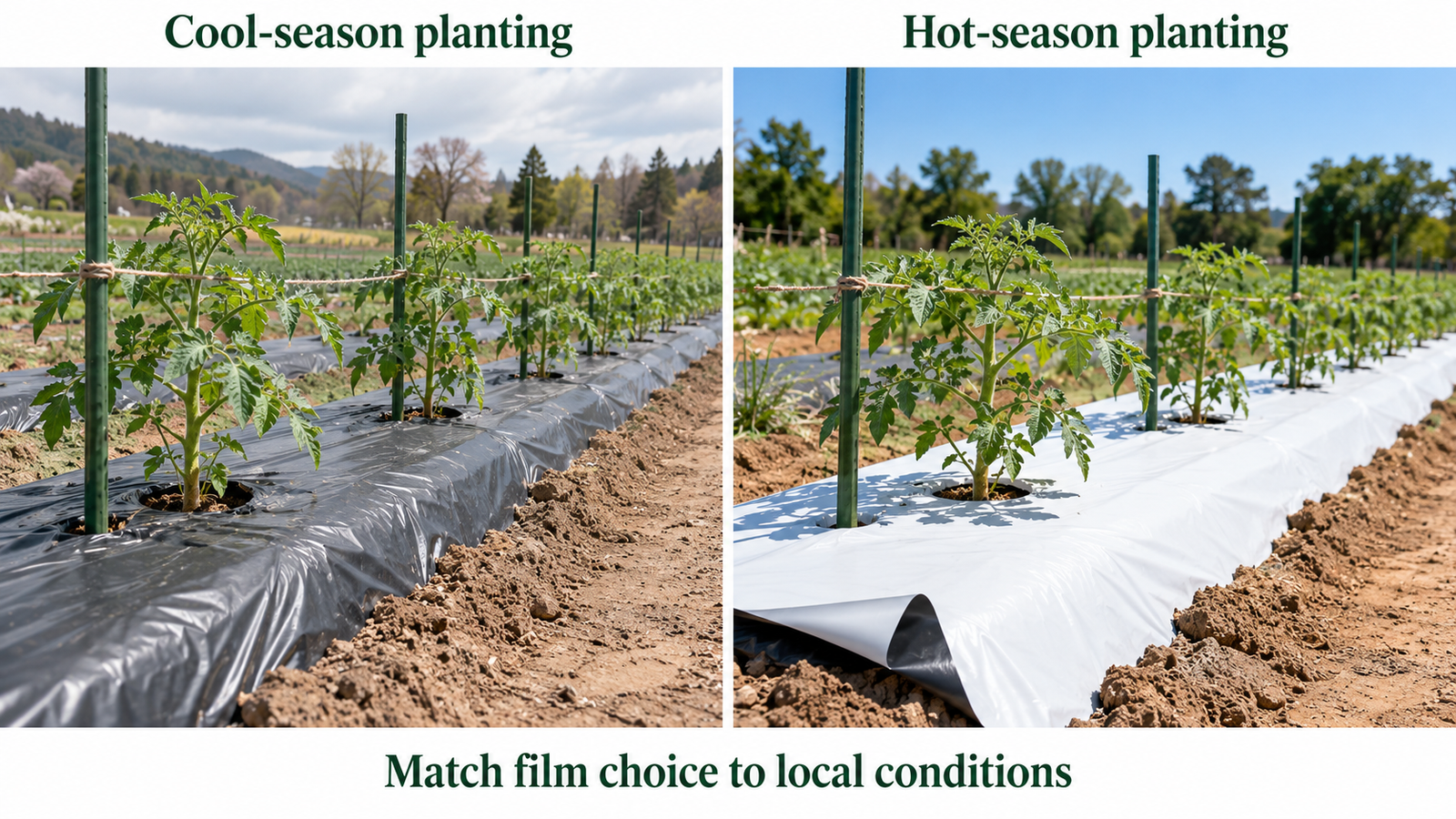
The short answer: start with the growing conditions, then specify the film. Black PE is a warming option to consider for cooler establishment conditions; white-on-black film is an option when limiting additional soil heating is the priority. Confirm the actual grade and layout rather than treating any color as universally best. For commercial orders, match the film to the complete tomato production system.
Start with the tomato production system
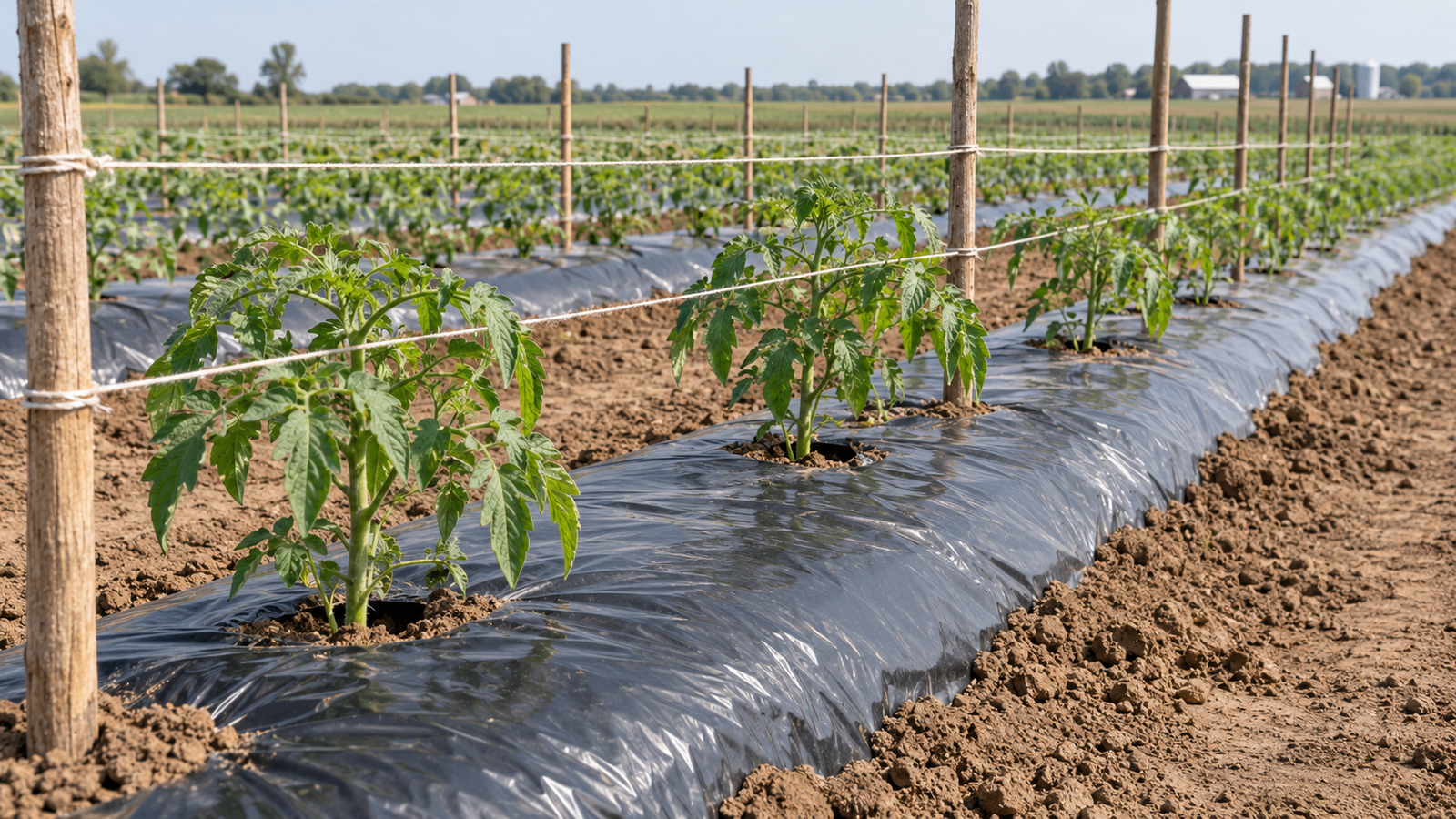
A request for “tomato mulch film” does not define the job. Tell the supplier whether the crop is grown in the field or under a high tunnel, when it will be transplanted, and how the plants will be supported and harvested.
Staked or trellised fresh-market tomatoes
Include the support positions and access needed for repeated crop work. Planting holes, drip tape and stakes need a coordinated layout; they should not be specified as unrelated items.
Processing tomatoes or a different bed system
Confirm the actual planting and harvesting equipment, row arrangement and removal method. Do not copy the hole pattern or bed dimensions from a staked fresh-market system without checking compatibility.
Protected cultivation also needs its own assessment. A high-tunnel cover changes the growing environment, but it does not automatically establish the correct mulch color, irrigation schedule or film thickness.
Choose for the planting window, not the crop name alone
Ask what the root zone needs during establishment: additional warming, or protection from unwanted extra heating? Local planting dates and field conditions are more useful than a universal “best mulch for tomatoes” label.
| Situation | Film to consider | Check before choosing |
|---|---|---|
| Cool establishment period; warming is desirable | Black PE mulch | Local soil conditions, planting date, bed contact and the temperatures expected later in the crop. |
| Hot establishment period; extra root-zone heat is unwanted | White-on-black film, with the intended white face upward | The specified grade, correct orientation, soil moisture and local crop-management advice. |
| A reflective-film option is being evaluated | A clearly identified reflective construction | Whether the material is silver-pigmented PE or metallized film, and whether relevant evidence applies to that exact construction. |
This is a selection framework, not a guaranteed temperature or yield result. For the wider comparison of black, white, silver and clear films, see our plastic mulch color guide.
Silver does not identify one material. TIAN FENG's silver-black mulch is silver-pigmented coextruded PE, not aluminum-metallized film. Trials on a different reflective construction do not establish this product's pest, virus or yield performance. Read the reflective mulch material and evidence guide before comparing claims.
Confirm the bed layout before ordering planting holes
The practical question is not only how to plant tomatoes in plastic mulch. It is whether the film, transplanting method, irrigation and supports will work together throughout the crop.
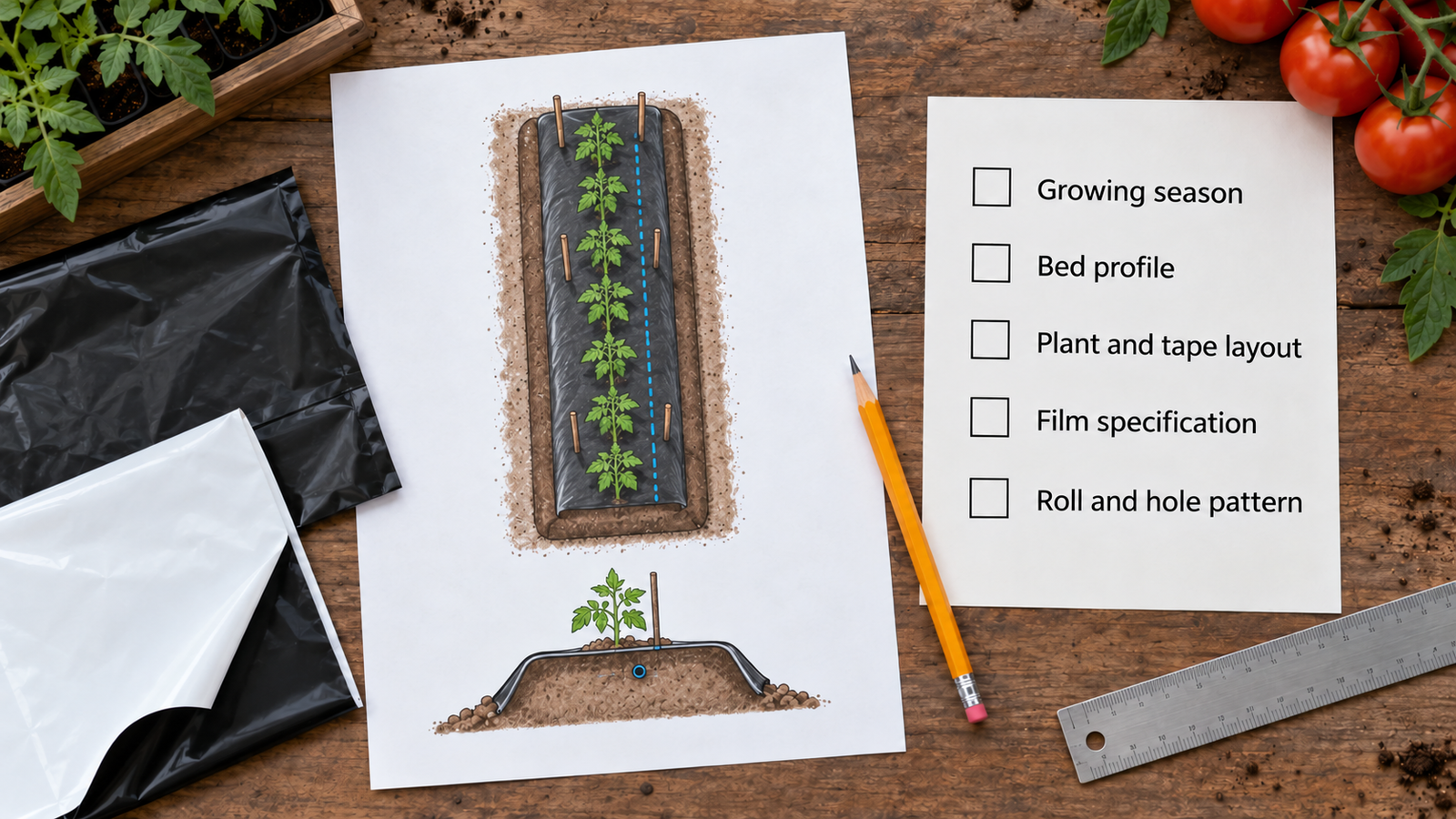
A simple plan view and bed cross-section should identify:
- Bed profile: top width, shoulders and the film allowance needed for both buried edges.
- Plant arrangement: the number of rows, row positions, in-row spacing and any staggered pattern.
- Planting openings: hole shape, size, spacing and their reference position across the film.
- Drip route: tape position relative to the crop, with the placement checked against the irrigation plan.
- Support locations: stake or anchor positions that avoid damaging the drip tape.
Specify whether holes will be made during installation or supplied pre-punched. For pre-punched film, agree on a drawing and trial fit before committing to the full order. The same hole pattern should not be assumed suitable for every cultivar, bed system or transplanting machine.
For general bed preparation, laying and edge anchoring, use the separate plastic mulch installation guide.
Check the first planted section before continuing
A correctly specified roll still needs an installation check. Review a short planted section with the crew before repeating the layout across the field.
- Inspect plant contact with the film. Avoid leaving tender foliage or stems lying against sun-heated plastic.
- Check water delivery. Confirm the drip system operates and that water reaches the intended root zone; do not judge soil moisture from the film surface.
- Review hole alignment and film damage. Openings should suit the transplanting method without unnecessary tears or exposed gaps.
- Recheck the support route. Install stakes without puncturing the irrigation line or pulling the film out of position.
Mulch does not replace irrigation management or crop scouting. Ordinary black film also does not reliably exclude every weed; nutsedge can remain a problem. Plan local weed and crop management separately from the film purchase.
Turn the crop plan into a clear film order
The most useful inquiry describes the intended work before asking for the lowest price. This helps avoid comparing rolls that differ in usable width, thickness, quantity, construction or expected field exposure.
| Order item | Information to confirm |
|---|---|
| Growing conditions | Region, planting month, field or protected system, and the main reason for changing or selecting the film. |
| Material and color | PE construction, intended upper face and any functional requirement supported by the proposed grade. |
| Finished film width | Total unfolded width, not just exposed bed-top width; include shoulders and the required anchoring allowance. |
| Thickness and tolerance | Agreed units, nominal film thickness and acceptance tolerance, considered with laying method, field conditions and removal needs. |
| Crop and exposure period | Expected laying date, harvest period and removal date. Ask for the grade's outdoor-use suitability to be confirmed. |
| Planting-hole pattern | An agreed drawing showing row offsets, hole spacing, dimensions, repeat pattern and relevant tolerances. |
| Roll and delivery details | Length per roll, roll quantity, equipment limits, core and packing requirements, destination and required arrival time. |
| End-of-season handling | Removal method, separation from drip tape and the local acceptance conditions for the used film. |
There is no single thickness that is correct for all tomato projects. Use the mulch thickness guide for units and specification checks, and the roll-size guide for width and length terminology.
Compare total project requirements, not roll price alone. Include laying, handling and removal where relevant. Thin PE film, woven ground cover and soil-biodegradable film are different materials; do not transfer one product's service-life or end-of-season assumptions to another.
Is red plastic mulch better for tomatoes?
Not universally. Red films are marketed for tomatoes, but a color name does not establish identical optical properties or the same crop response across brands, locations and seasons.
In the spring comparison reported by Diaz-Perez and Batal, the red and two black treatments were in the same statistical group for fruit yield. A numerically higher value therefore did not demonstrate that red was superior. The study also used a particular harvest assessment rather than a full commercial season of repeated marketable harvests.
If evaluating a red film, ask which exact material was tested, under what growing conditions, against which control and using what harvest measure. Treat published trial results as evidence about those conditions, not a guaranteed return from buying any red-colored roll.
Plastic mulch for tomatoes FAQ
Is black plastic mulch suitable for tomato plants?
It can be suitable when warming the root zone is useful, especially during cooler establishment conditions. Evaluate the planting window and later heat exposure rather than selecting black film simply because the crop is tomatoes.
When should I consider white-on-black mulch?
Consider it when limiting additional soil heating is a priority. Confirm the intended white face is installed upward and assess the actual grade, local conditions and irrigation plan. It does not guarantee a fixed temperature reduction.
Does tomato mulch need pre-punched holes?
No. Openings may be made during installation or supplied pre-punched, depending on the planting system. A pre-punched order needs an agreed layout; film width alone does not define row offsets, hole spacing or repeat pattern.
Can I use straw instead of plastic mulch for tomatoes?
Straw and plastic film are different covering systems, not interchangeable roll specifications. Compare the local agronomic fit, installation, irrigation access and end-of-season work. This guide focuses on specifying agricultural film, not declaring one covering best for every garden or farm.
What if I do not know the film thickness or roll width yet?
Send the growing region, planting month, production system and approximate area or quantity first. Add a bed sketch or current roll details if available. Ask for unclear assumptions to be identified in the preliminary quotation before approving the final specification.
Discuss film options for your tomato crop
TIAN FENG supplies custom PE mulch film. For a tomato project, start with your growing region, planting month, production system and approximate area or roll quantity. If available, include a bed sketch showing plant rows, drip tape and support positions.
You can review our black mulch film and white-on-black mulch film options. Confirm the proposed grade, dimensions, hole pattern and delivery requirements before placing an order.
References and further reading
These sources inform the growing-condition and material distinctions in this guide. External trial results are not test reports for TIAN FENG products.
- NC State Extension: Plastic Mulch Selection for Tomato Production in North Carolina — planting-season and root-zone temperature considerations.
- University of Georgia Extension: Commercial Tomato Production Handbook — plasticulture, bed preparation, transplanting and irrigation context.
- Diaz-Perez and Batal: Colored Plastic Film Mulches Affect Tomato Growth and Yield Via Changes in Root-zone Temperature — original research on film properties, growing seasons and tomato response.
- University of Delaware Extension: Plasticulture Tomatoes — production-system and cost context; its woven-ground-cover budget is not a thin-PE-film specification.