
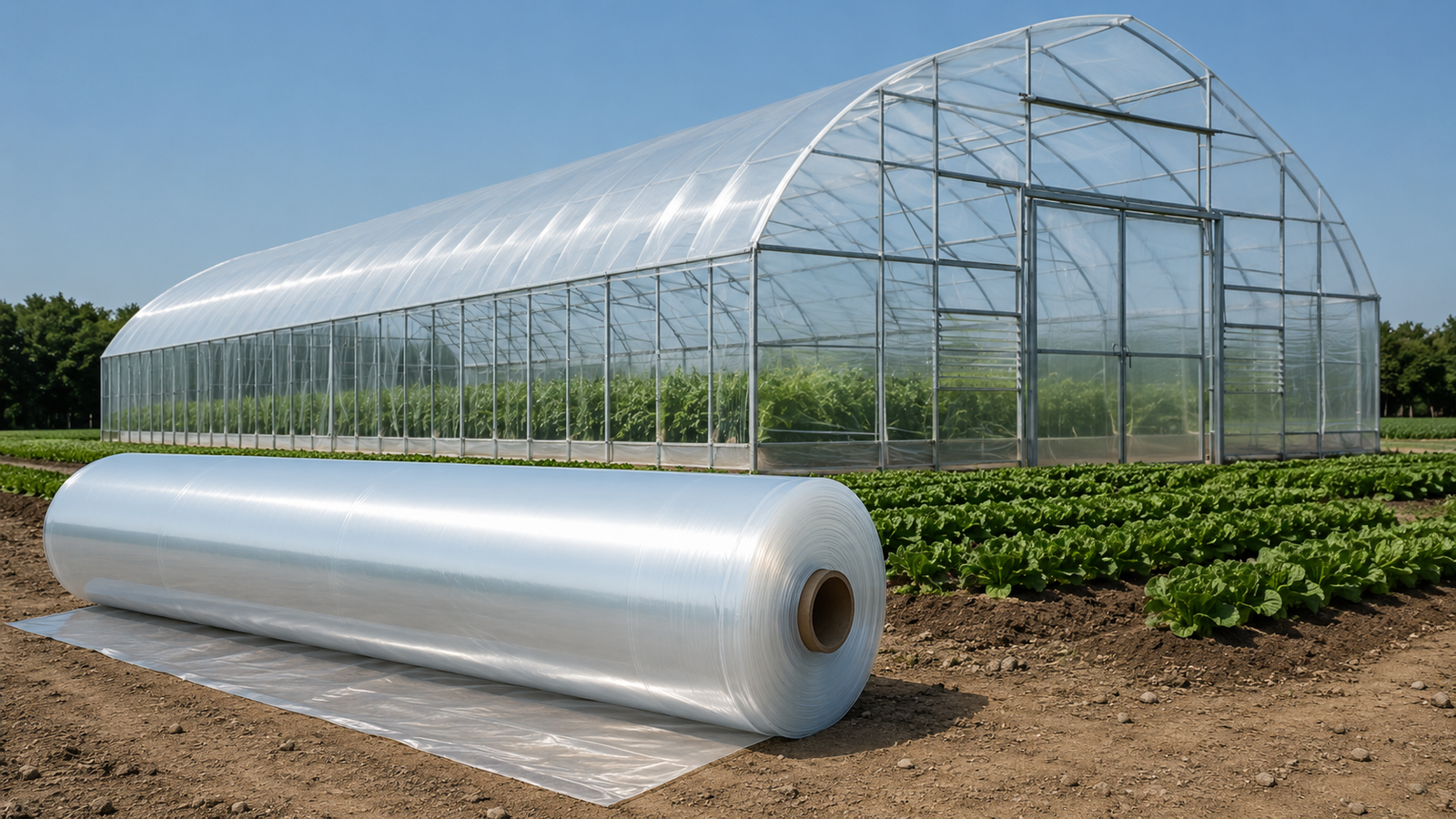
Greenhouse Plastic Thickness:What Mil Should You Use?
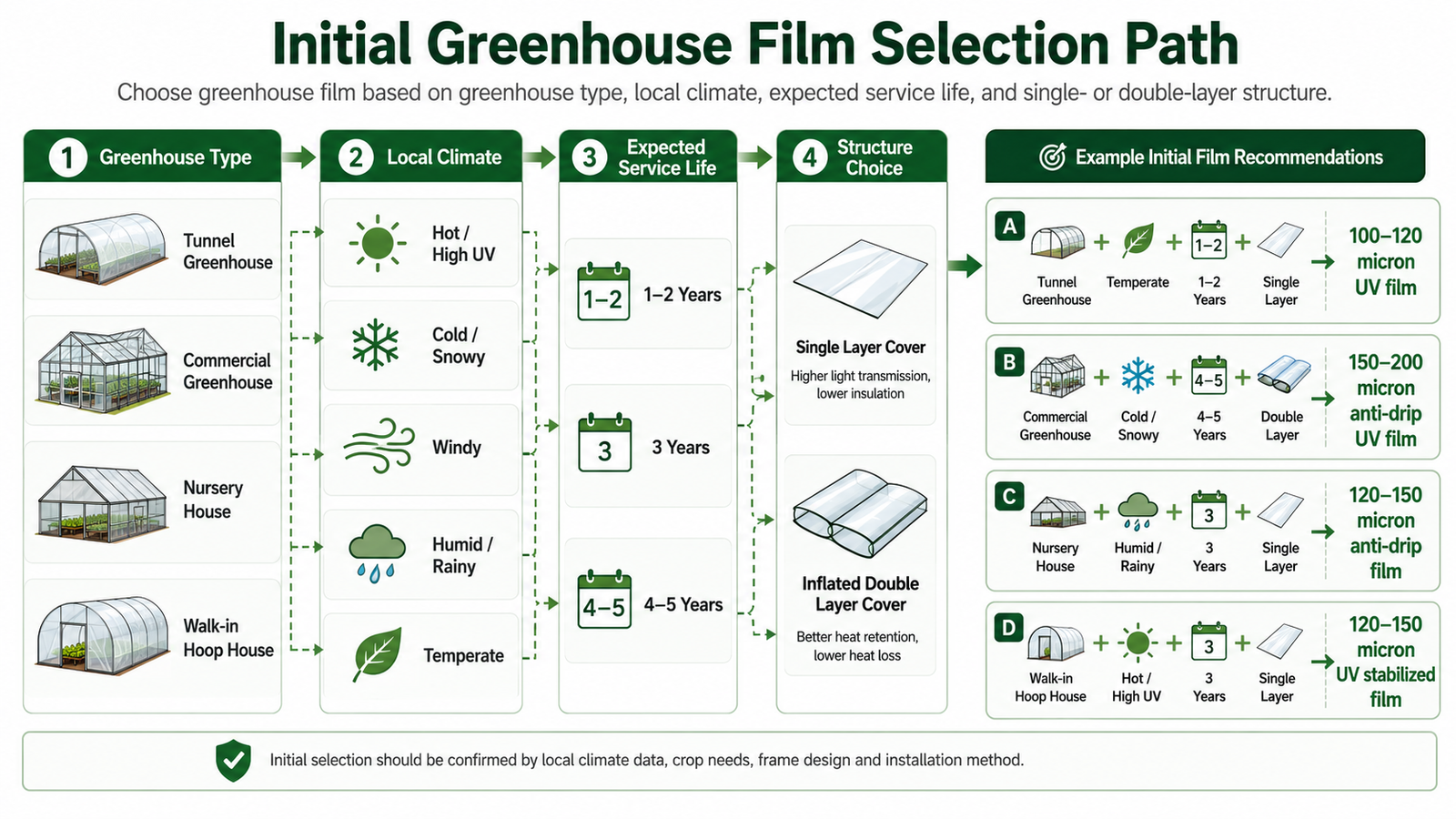
For most permanent or full-season greenhouses, 6 mil greenhouse-grade polyethylene film—about 150 microns—is the practical starting point. Use 3–4 mil film for temporary or single-season protection. Consider 8 mil or reinforced film when the covering needs additional mechanical durability.
But thickness is only one part of the decision. A thicker sheet without UV stabilization can fail sooner than a properly formulated 6 mil greenhouse film. Climate, resin quality, additives, installation, frame design and single- versus double-layer construction all affect real performance.
This guide explains what greenhouse plastic thickness changes, what it does not change, and how to specify the right film without paying for thickness that your greenhouse does not need.
Quick Specs: Greenhouse Plastic Thickness
| Thickness | Metric Equivalent | Typical Use | Main Advantage | Main Limitation |
|---|---|---|---|---|
| 3 mil | 76.2 microns | Temporary covers and short seasonal use | Lightweight and economical | Limited resistance to handling and weather exposure |
| 4 mil | 101.6 microns | Low tunnels, overwintering and one-season structures | Easy to install and replace | Usually not the first choice for a permanent greenhouse |
| 6 mil | 152.4 microns | Full-season and multi-year greenhouses | Common balance of strength, light and cost | Service life still depends on UV stabilization and installation |
| 8 mil | 203.2 microns | Projects needing additional puncture or handling resistance | More material for mechanical durability | Higher cost; not automatically better insulated |
| 10 mil | 254 microns | Reinforced or specialty covering systems | Heavy-duty construction options | May be unnecessary for a standard greenhouse |
| 12 mil | 304.8 microns | Woven, reinforced or specialized covers | High resistance in the correct construction | Film type and light transmission require careful review |
Short answer: If you are unsure what mil plastic to use for a greenhouse, begin with a UV-stabilized 6 mil greenhouse-grade film. Then adjust the specification for project life, climate, structure and required functional additives.
What Does “Mil” Mean, and Is It the Same as a Millimeter?
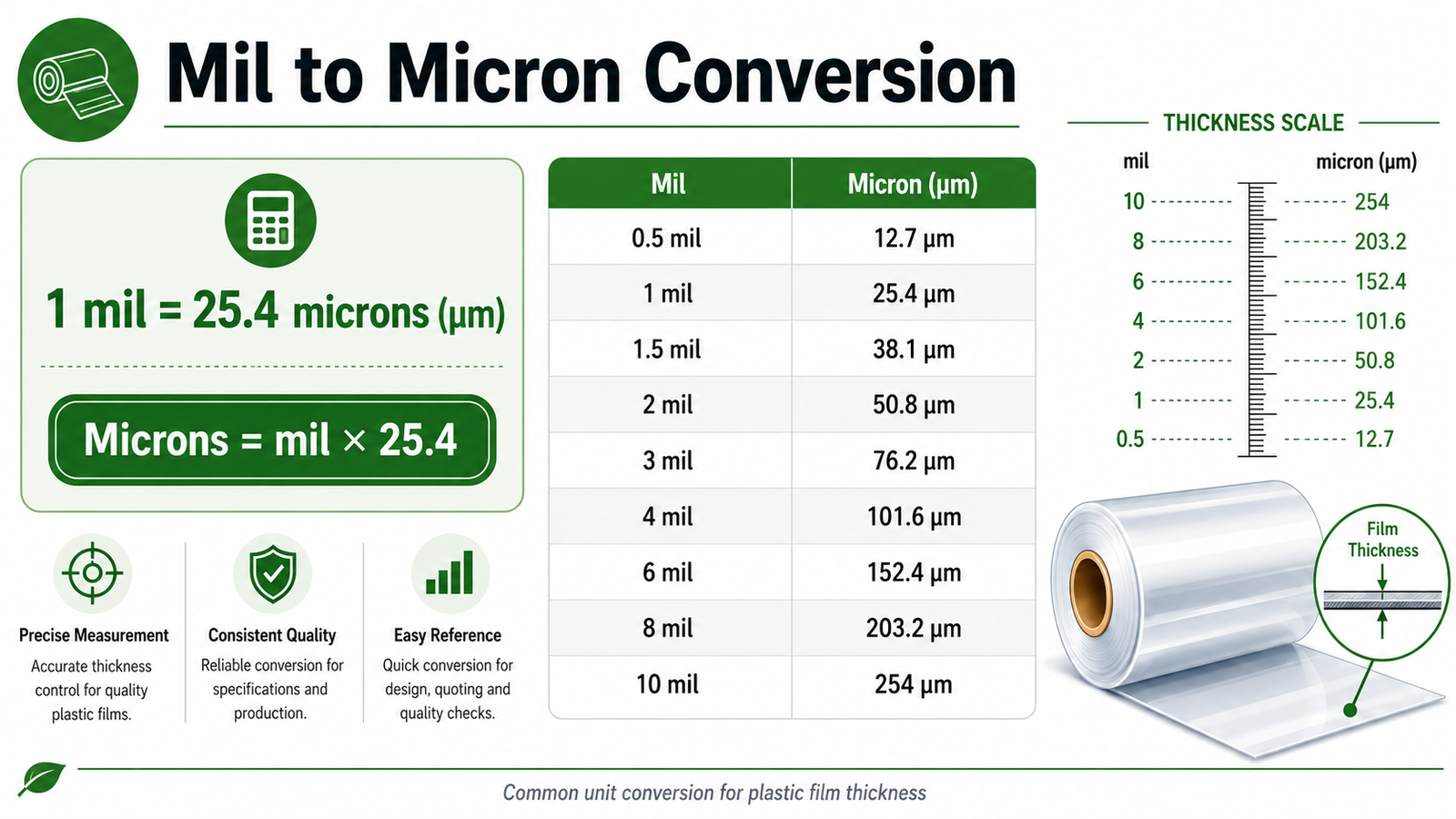
A mil is one-thousandth of an inch:
1 mil = 0.001 inch = 0.0254 millimeter = 25.4 microns
The conversion is defined in the NIST Guide to the SI.
A mil is not a millimeter. This distinction matters when a US buyer and an international manufacturer discuss the same film:
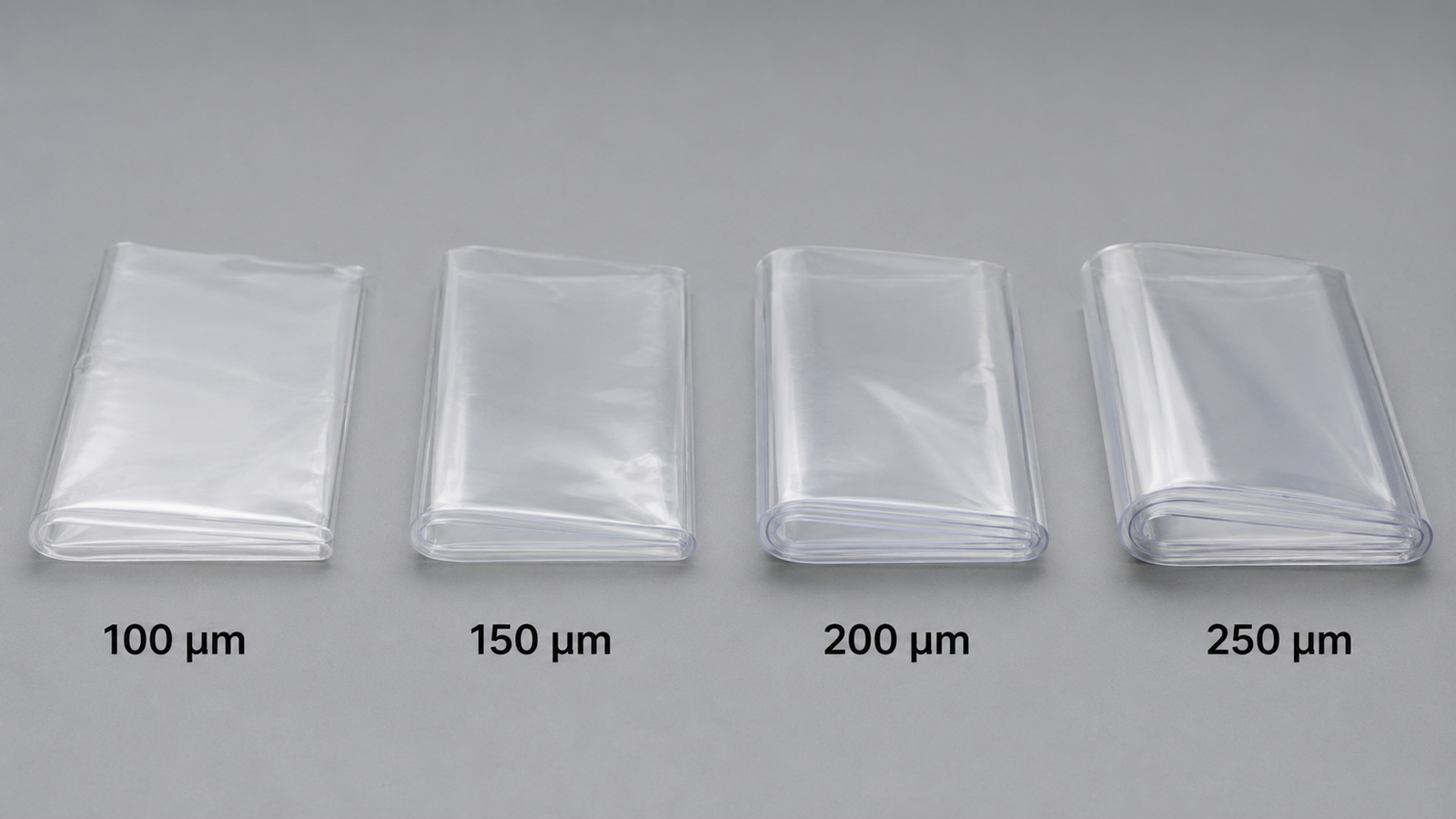
- 4 mil is approximately 100 microns.
- 6 mil is approximately 150 microns.
- 8 mil is approximately 200 microns.
- 10 mil is approximately 250 microns.
Greenhouse Film Micron, Mil and Gauge Conversion Chart
Metric greenhouse-film quotations commonly use microns, while North American buyers often use mil. Some film suppliers also use gauge, commonly treating 100 gauge as 1 mil. Because “gauge” can be used differently in other material industries, never place a gauge number on a purchase order without also stating the controlling micron or mil value.
| Nominal Metric Thickness | Exact Mil Equivalent | Common Rounded Mil Label | Common Film-Gauge Equivalent | Typical Greenhouse-Use Discussion |
|---|---|---|---|---|
| 80 microns | 3.15 mil | About 3 mil | 315 gauge | Light seasonal or project-specific film |
| 100 microns | 3.94 mil | About 4 mil | 394 gauge | Temporary tunnels and seasonal covers |
| 120 microns | 4.72 mil | About 4.7 mil | 472 gauge | Intermediate metric specification; verify grade and service period |
| 150 microns | 5.91 mil | About 6 mil | 591 gauge | Common full-season or multi-year starting point when greenhouse grade |
| 180 microns | 7.09 mil | About 7 mil | 709 gauge | Project-specific additional material or mechanical margin |
| 200 microns | 7.87 mil | About 8 mil | 787 gauge | Heavier conventional or specialty film; verify the complete construction |
Conversion formulas: microns ÷ 25.4 = mil; mil × 25.4 = microns; and, where the common plastic-film convention is explicitly used, mil × 100 = gauge. Carry the unrounded value in quality-control calculations and use the mutually agreed nominal value on the purchase order.
If a quotation says “6 mm greenhouse film,” request clarification. Six millimeters would be a rigid-sheet scale, not a normal flexible greenhouse-film thickness.
What Greenhouse Plastic Thickness Changes—and What It Does Not
Thickness gives a film more material across its cross-section. All else being equal, that can improve resistance to puncturing, abrasion and damage during handling. It can also make a cover less forgiving to unfold, tension or replace.
However, thickness does not tell you the complete quality of a greenhouse film.
Thickness can influence:
- Resistance to punctures and handling damage
- Film weight and installation effort
- Suitability for temporary versus longer-term use
- The amount of material purchased
- Compatibility with some reinforced constructions
Thickness alone does not define:
- UV resistance
- Expected outdoor life
- Light transmission and haze
- Anti-drip or anti-fog performance
- Infrared heat-retention performance
- Tensile and tear strength
- Resistance to chemicals used around the greenhouse
- Wind or snow rating of the complete greenhouse structure
This is why a greenhouse-film specification should include both physical thickness and performance requirements.
Thickness is only one part of the decision. Compare film, reinforced plastic and polycarbonate in our greenhouse plastic buying guide.
3, 4, 6, 8, 10 and 12 Mil Greenhouse Plastic Compared
3–4 Mil: Temporary and Seasonal Protection
Three- and four-mil polyethylene films are commonly associated with short-term covers, narrow tunnels and overwintering structures. They cost less and are easier to handle, but they contain less material to resist punctures, frame abrasion and wind movement.
The University of Connecticut notes that one-year co-poly film is available in 3, 4 and 6 mil thicknesses, while 3 or 4 mil film is commonly used for one-year narrow tunnels and overwintering houses. It also warns buyers to distinguish these products from multi-year greenhouse-grade polyethylene. See the university’s Plastic Film Update.
Choose 3–4 mil when:
- The cover is intentionally seasonal.
- Low initial cost matters more than replacement labor.
- The structure is small and protected.
- The film will be removed and stored after use.
Do not select it only because the greenhouse is small. A small year-round greenhouse can still need UV-stabilized, multi-year film.
6 Mil: The Common Starting Point
Six mil is approximately 152 microns and is the most familiar greenhouse plastic thickness in the US market. It is widely used because it balances material weight, strength, cost and light transmission.
For its seasonal high-tunnel program, USDA NRCS guidance specifies at least 6 mil greenhouse-grade, UV-resistant polyethylene. That requirement applies to the referenced program rather than every greenhouse in every jurisdiction, but it is a useful indication of what agricultural programs regard as a practical baseline. See the USDA NRCS high-tunnel guidance.
Six mil is a strong candidate when:
- The greenhouse operates for a full season or year-round.
- The buyer wants a multi-year greenhouse-grade film.
- Good light transmission remains important.
- The structure uses a conventional single or inflated double layer.
- UV, anti-drip, anti-fog or thermal functions will be incorporated.
Buyers who need custom width, length or functional additives can compare the available commercial greenhouse plastic roll specifications before requesting a project quotation.
The phrase “6 mil” is not a quality certificate. Confirm the film grade, UV package, warranty conditions and mechanical properties before buying.
To compare seasonal and multi-year grades without treating gauge as a lifetime guarantee, review the relationship between film thickness and expected service life.
8 Mil: More Thickness for Specific Mechanical Demands
Eight mil is approximately 203 microns. The additional material can help when a project needs more resistance to handling, puncture or abrasion, but an 8 mil film is not automatically superior in every greenhouse.
Choose 8 mil only after asking:
- Is the film a conventional polyethylene film, a reinforced film or a different construction?
- Does the frame and fastening system suit the added weight and stiffness?
- What are the verified light transmission and haze values?
- Does the project need more thickness, or would better UV stabilization and installation solve the actual problem?
- Is the product warranty longer, and under what conditions?
Paying for 8 mil makes sense when its tested properties solve a defined risk. It is poor value when thickness is used as a substitute for an incomplete specification.
10–12 Mil and Above: Specialty or Reinforced Systems
Films at 10–12 mil and above are often associated with heavy-duty, woven or reinforced covers. They may suit demanding applications, but they should not be compared with standard 6 mil greenhouse polyethylene by thickness alone.
A reinforced 12 mil cover can have different resin construction, reinforcement, flexibility, light diffusion, fastening requirements and warranty terms. Request a complete technical data sheet. The word “thicker” does not explain how the material behaves as a greenhouse covering.
How to Choose Greenhouse Plastic Thickness by Use and Climate
| Greenhouse Situation | Practical Starting Point | What to Confirm |
|---|---|---|
| Temporary low tunnel | 3–4 mil seasonal film | Planned removal date, UV exposure and fastening |
| Full-season hobby greenhouse | 6 mil greenhouse-grade film | UV stabilization, light transmission and expected project life |
| Commercial high tunnel | 6 mil greenhouse-grade film or engineered alternative | Program requirements, wind exposure, warranty and installation |
| Commercial multi-span greenhouse | Project-specific 6–8 mil or metric equivalent | Optical properties, additives, thickness tolerance and structural design |
| High-UV region | UV-stabilized greenhouse-grade film | Stabilizer package and warranty conditions, not thickness alone |
| Wind-exposed site | Properly tensioned film; reinforced option where justified | Frame rating, anchoring, fastening and tear resistance |
| Cold-climate heated greenhouse | Often an inflated double layer with IR/thermal functions | Heat-loss design, blower system and reduced light transmission |
| Snow-prone site | Film selected as part of an engineered structure | Structural snow rating and snow-management instructions |
Do not use thicker film as a substitute for a properly designed frame. USDA NRCS guidance notes that covers may need to be removed or rolled up if a high-tunnel structure is not designed for expected snow loads.
The Durability System: Thickness, UV, Resin and Installation
The useful life of greenhouse plastic is an outcome of a system:
Film life = material formulation + UV stabilization + mechanical properties + installation + operating environment
1. Film formulation
Greenhouse polyethylene is commonly produced with multiple resin layers and functional additives. These layers can be designed for strength, optical performance, condensation control or heat management.
2. UV stabilization
Untreated polyethylene degrades under sunlight. It becomes brittle, loses strength and eventually cracks or tears. A UV stabilizer slows this process, but its performance still depends on formulation, exposure and operating conditions.
The University of Connecticut distinguishes seasonal co-poly from greenhouse-grade film and explains that greenhouse-grade polyethylene contains UV stabilizer for multi-year use. This is more meaningful than comparing thickness without knowing the formulation.
3. Mechanical properties
Thickness should be evaluated alongside tensile strength, elongation at break, tear resistance, puncture resistance and thickness uniformity across the roll.
4. Installation
Even a high-quality film can fail early when it rubs against rough frame components, flaps continuously, is overstretched, contacts unsuitable hot surfaces or is damaged around fasteners. Installation quality is part of film performance, not an unrelated afterthought.
After selecting a suitable thickness, use our greenhouse plastic installation guide to measure the cover, prepare the frame, pull and tension the film, and choose the correct fastening method for metal or wood frames.
How to Measure Greenhouse Film Thickness and Verify Tolerance
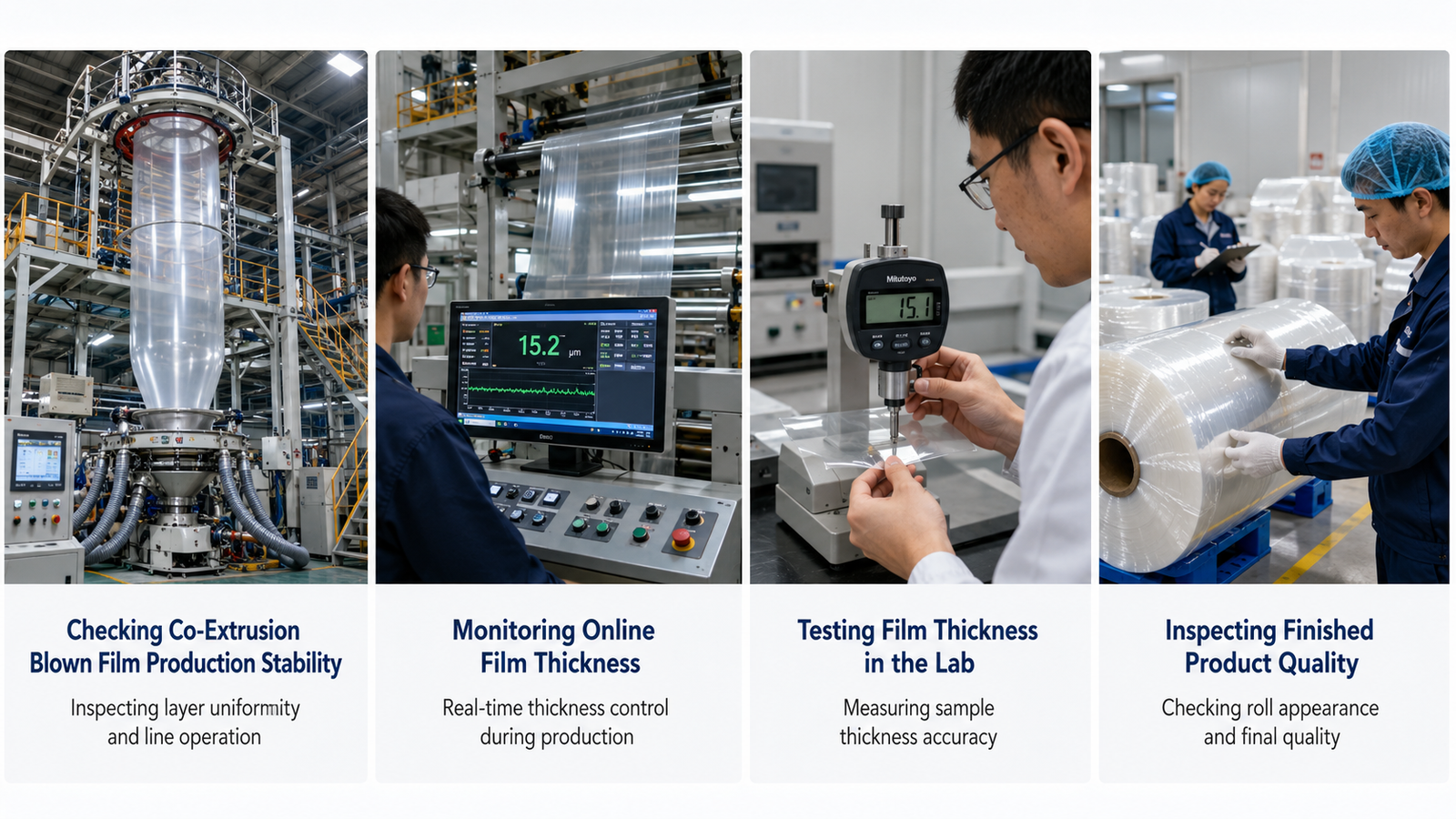
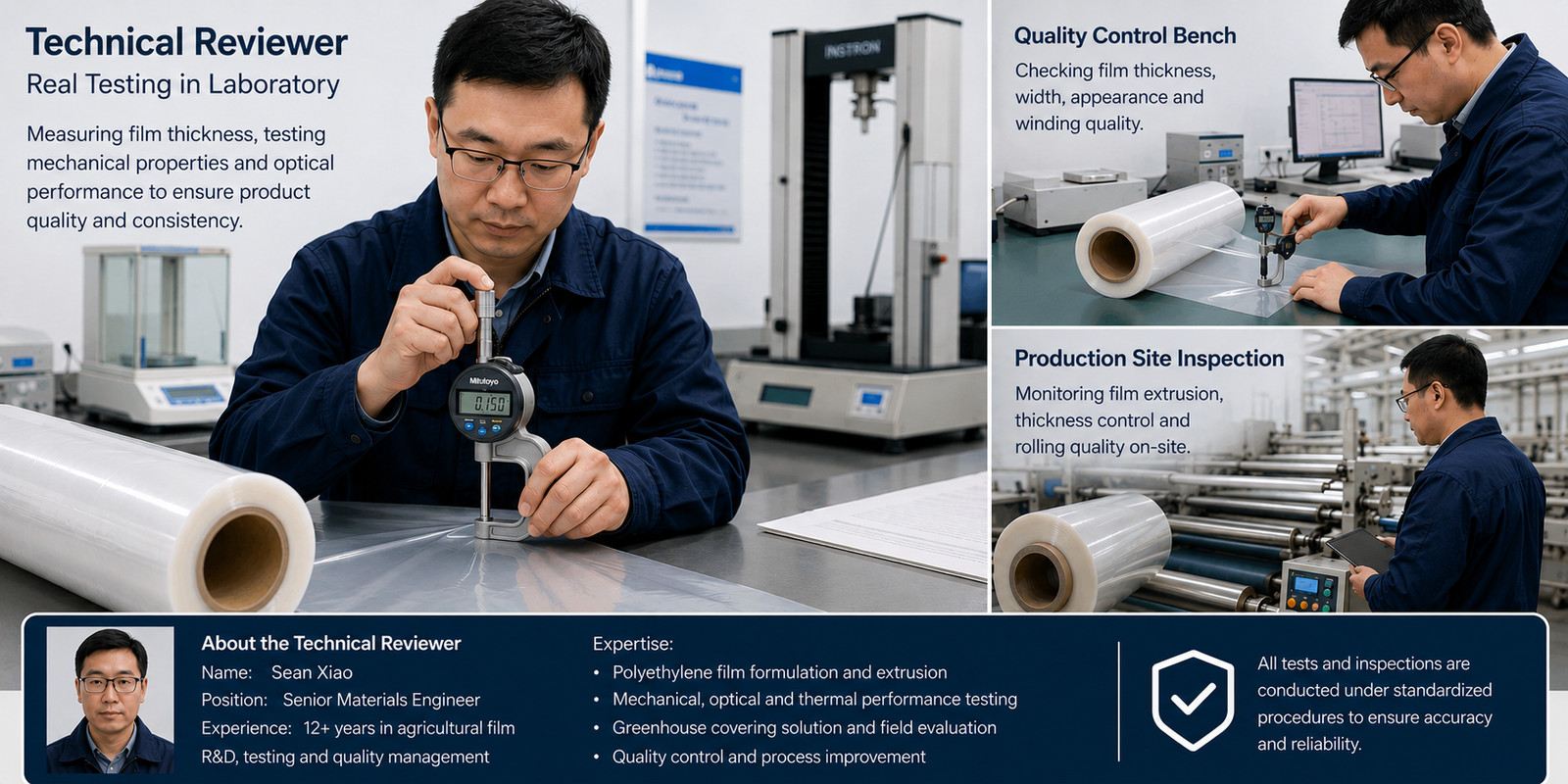
A nominal thickness such as 150 microns is the target specification, not proof that every point across every roll is exactly 150 microns. Extrusion variation, test location, instrument contact pressure, film temperature and the sampling plan can all affect the reported result.
Define the acceptance rule before production
A purchase specification should state all of the following:
- The nominal thickness and controlling unit, such as 150 microns
- The permitted tolerance and whether it applies to individual readings, roll average or both
- The measurement method and instrument requirements
- The number and location of measurements across the web and along the roll
- Whether folded edges, embossed areas, seams or reinforced zones are excluded
- How minimum, maximum and average results will be reported
- The action required if a roll or batch falls outside the agreed acceptance rule
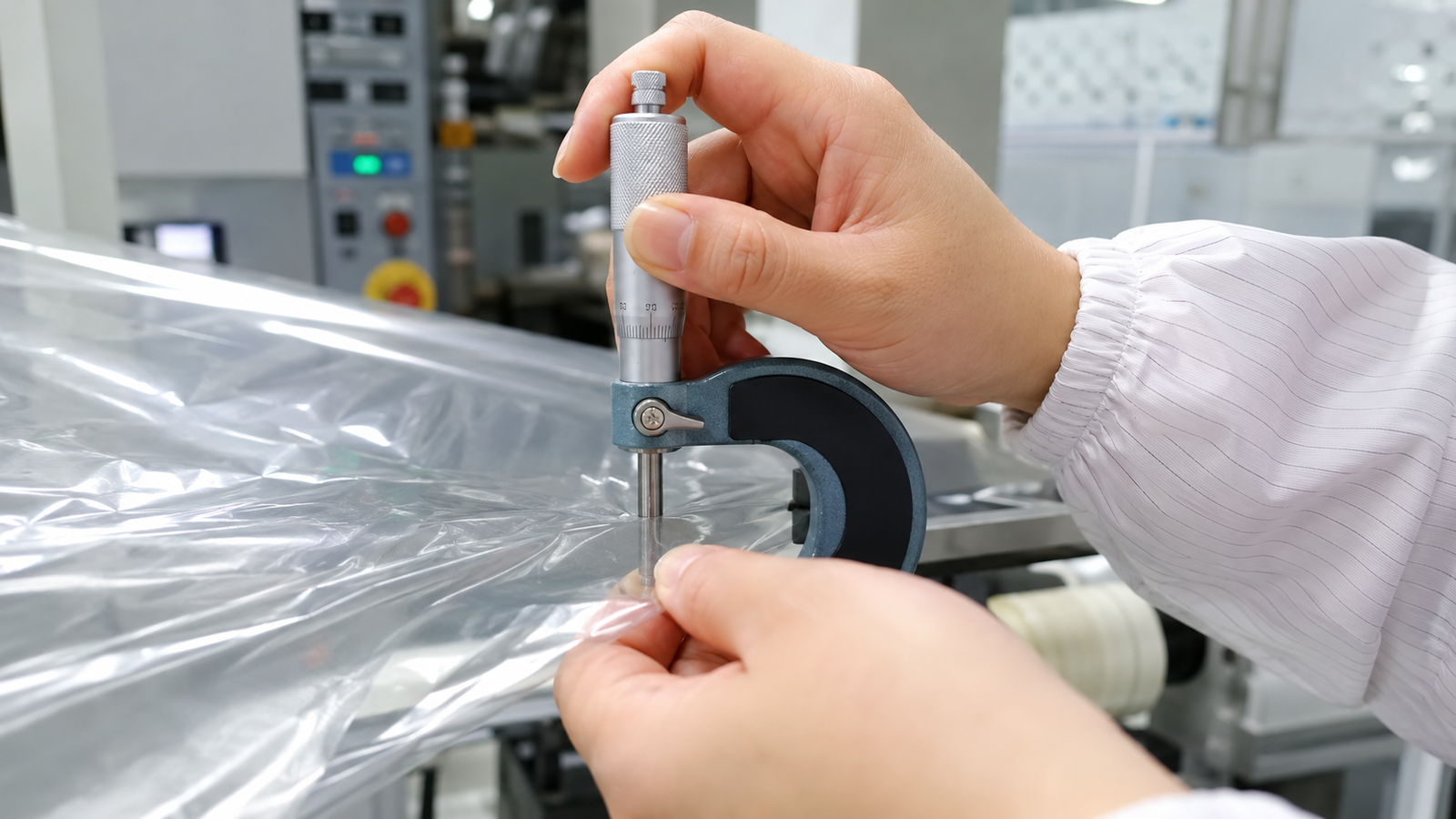
Measure a single clean layer
- Condition and prepare samples according to the agreed test method.
- Measure one layer, not a folded stack, unless the written method specifically requires another approach.
- Keep the specimen clean, flat and free from wrinkles or trapped debris.
- Use a calibrated instrument with the specified contact geometry and force.
- Take readings at the agreed cross-web and machine-direction locations.
- Report the individual readings, minimum, maximum and average instead of reporting only one favorable point.
ISO 4593 specifies mechanical-scanning thickness measurement for plastic film and sheeting and states that the method is not suitable for embossed film. ASTM D6988 provides guidance for determining film-specimen thickness, but its scope does not establish commercial sampling or quality-control classification. The product specification must therefore connect the selected method to a separate, agreed sampling and acceptance plan.
Manufacturer Technical Data: 150 Micron Clear Greenhouse Film
The following manufacturer-provided specification shows why film grade and formulation matter in addition to thickness. Values should be interpreted together with the stated test methods and product configuration.
Basic specification
| Product | 150 micron clear anti-aging greenhouse film |
|---|---|
| Material | Virgin LDPE and EVA, three-layer co-extruded with UV stabilizer |
| Nominal thickness | 150 microns (0.15 mm) |
| Thickness tolerance | ±10% of the 150 micron nominal thickness |
| Area weight | 138 g/m² |
| Color | Clear, colorless |
| Working temperature | -40°C to +60°C |
| Outdoor service-life specification | 3–5 years, subject to climate, installation and operating conditions |
| Product standard | GB/T 4455-2019 |
Mechanical properties at 23°C
| Property | Machine Direction (MD) | Transverse Direction (TD) | Test Method |
|---|---|---|---|
| Tensile strength | ≥22 MPa | ≥19 MPa | GB/T 1040.3 |
| Elongation at break | ≥420% | ≥360% | GB/T 1040.3 |
| Right-angle tear strength | ≥95 kN/m | ≥85 kN/m | QB/T 1130 |
Optical and thermal properties
| Property | Technical Value | Test Basis |
|---|---|---|
| Visible light transmittance (400–700 nm) | ≥91% | GB/T 2410 |
| Haze | ≤4.5% | GB/T 2410 |
| UV blocking rate (290–380 nm) | ≥92% | Manufacturer TDS; confirm the final spectral test method |
| Infrared heat-retention rate | ≥32% | Manufacturer TDS; confirm the method and spectral range |
Accelerated weathering performance
After 1,000 hours of xenon-lamp accelerated aging, the stated specification is:
- Tensile-strength retention ≥82%
- Elongation retention ≥78%
- Light-transmittance loss ≤9%
- No cracking, powdering or brittle fracture
Optional configurations include a 12–18 month anti-drip/anti-fog version, a standard UV-weatherable version without anti-drip treatment, and a sulfur-resistant version for greenhouse fumigation environments.
Does Thicker Greenhouse Plastic Insulate Better?
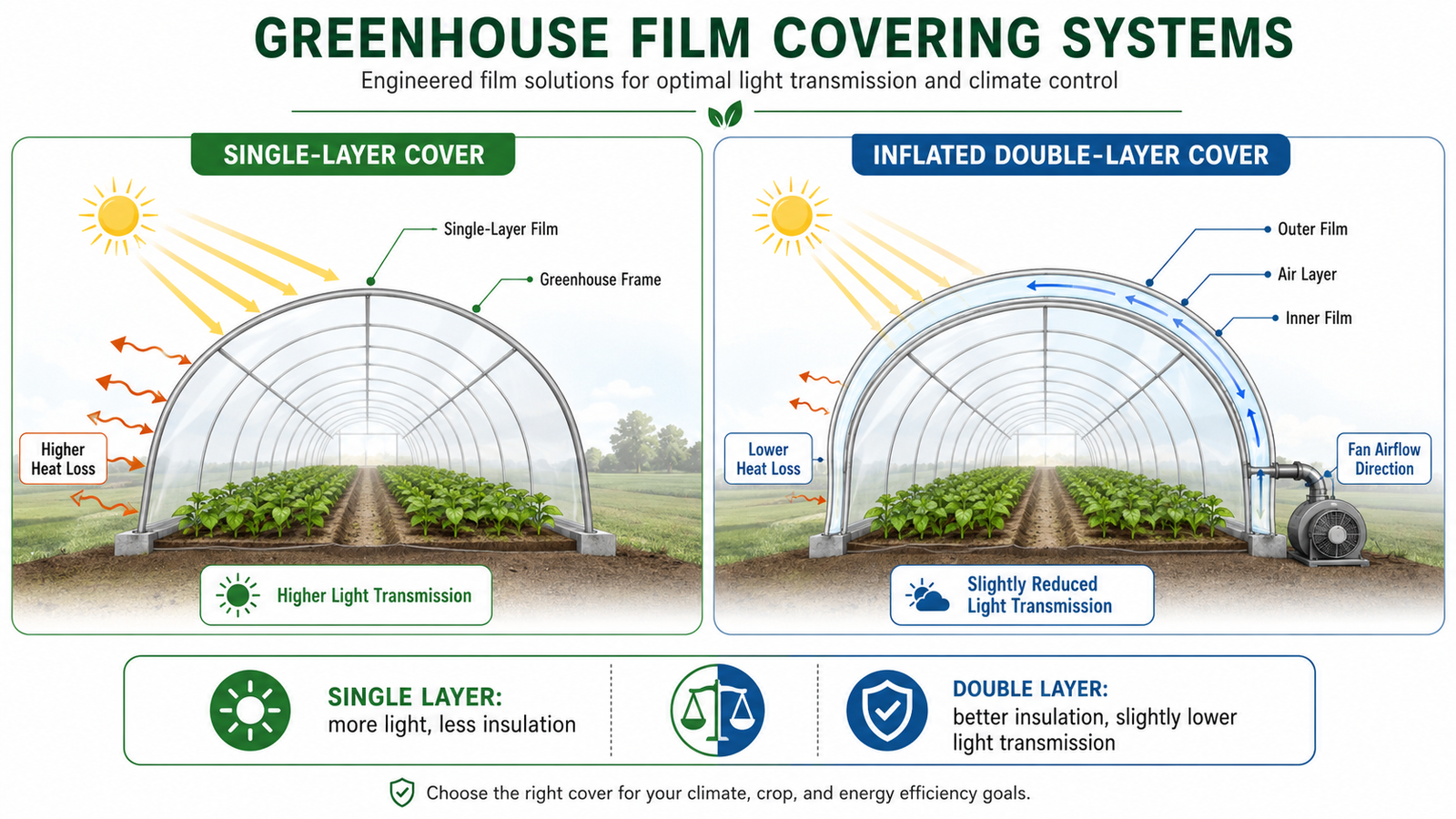
A small increase in film thickness should not be confused with the larger insulation effect created by a sealed air space.
Michigan State University explains that two layers of polyethylene separated by air from a small inflation fan can reduce heat loss. The plastic commonly used in its example is clear 6 mil polyethylene. See Greenhouse Energy Conservation Strategies.
The University of Nevada, Reno reports that a new single-layer film may transmit approximately 88–92% of photosynthetically active radiation, while double-layer films transmit approximately 77–85%. Actual performance varies by product and condition, but the comparison shows the main tradeoff: an added layer can improve thermal performance while reducing available light. See its high-tunnel winter-management guidance.
For a heated greenhouse, evaluate:
- Single versus inflated double layer
- IR or thermal additives
- Air leakage
- Film condition and cleanliness
- Condensation
- Crop light requirements
Moving from 6 to 8 mil may add mechanical durability. It does not automatically deliver the same thermal benefit as a properly designed double-layer system.
Features That Matter Besides Thickness
UV stabilization
UV stabilization protects polyethylene from rapid sunlight degradation. Confirm the intended climate, warranty and installation conditions.
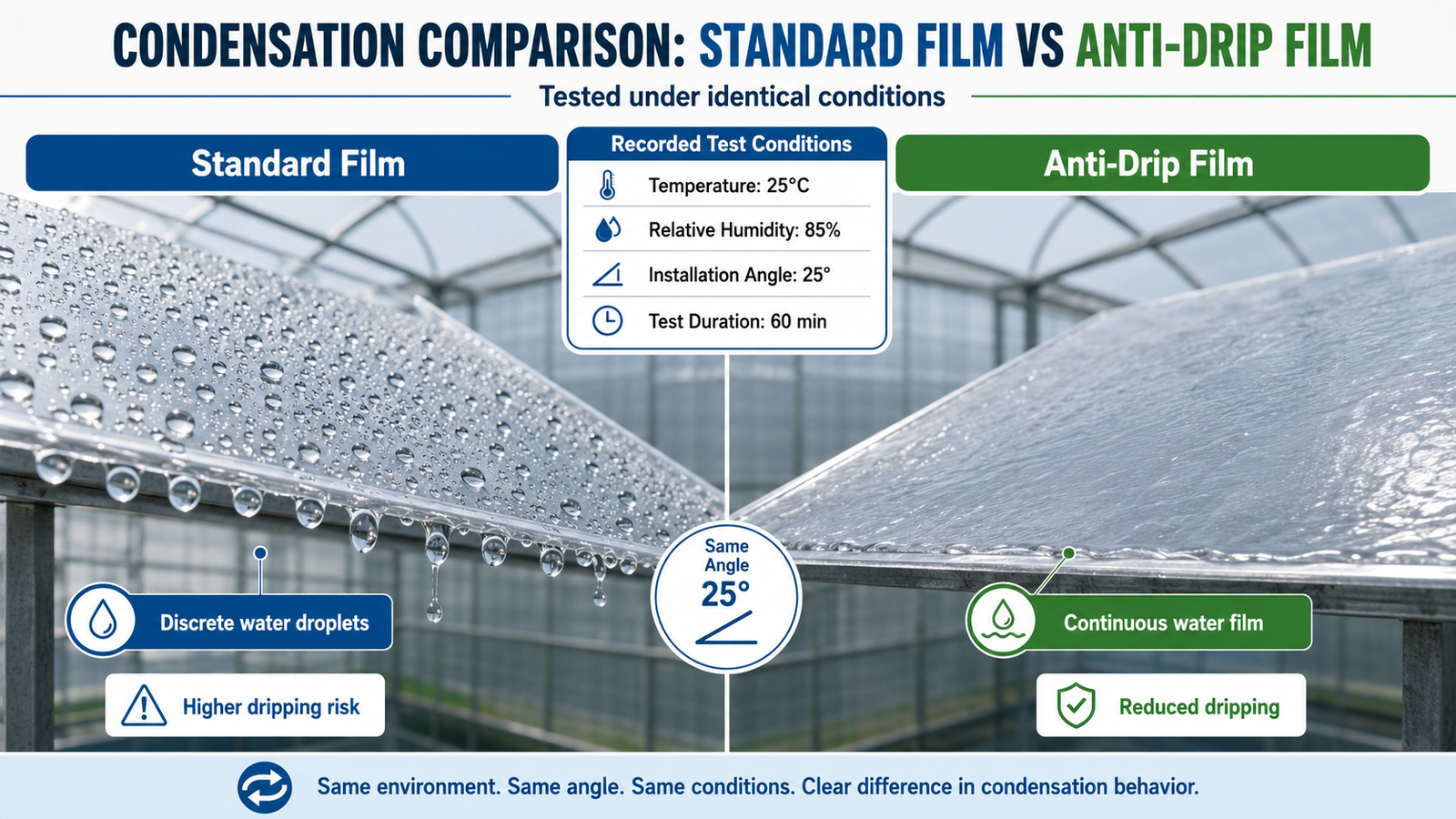
Anti-drip or anti-condensate
An anti-drip treatment changes the surface behavior of condensation so water forms a film and runs down the covering instead of accumulating as droplets. The Oklahoma State University greenhouse-covering guide notes that condensation control can help prevent plant damage and reduced winter light transmission.
Anti-fog
Anti-fog performance helps manage fine condensation that can reduce clarity and light. Ask whether the function is incorporated into the film and which side must face the greenhouse interior.
Light diffusion
Diffused light can distribute radiation more evenly through the crop canopy and reduce hard shadows. The right haze level depends on crop, climate and greenhouse design.
IR or thermal function
IR-retention films are formulated to reduce nighttime radiant heat loss. They should be evaluated as part of the greenhouse energy system, not as a replacement for sealing and insulation design.
Anti-dust and other functions
Dust accumulation can reduce light transmission over time. Functional requirements should be selected for the site instead of adding every available feature to the quotation.
Where Thicker Greenhouse Film Pays Off—and Where It Does Not
| Situation | Is More Thickness Likely to Help? | Better First Action |
|---|---|---|
| Frequent punctures during handling | Possibly | Compare puncture and tear data, not thickness alone |
| Film rubbing against the frame | Only partly | Remove sharp contact points and improve installation |
| Film becomes brittle in sunlight | Not by itself | Specify greenhouse-grade UV-stabilized film |
| Greenhouse loses heat at night | Limited benefit | Evaluate double layers, air leakage and IR film |
| Cover flaps in strong wind | Not by itself | Correct tension, fastening, anchoring and structural design |
| Heavy snow risk | Not by itself | Confirm engineered snow load and snow-management procedure |
| Temporary one-season tunnel | Usually unnecessary | Use an appropriate seasonal film |
| Reinforced heavy-duty application | Often | Compare the complete construction and optical data |
The best specification is not the thickest product available. It is the lowest-risk film that meets the project’s required life, optical performance, mechanical conditions and budget.
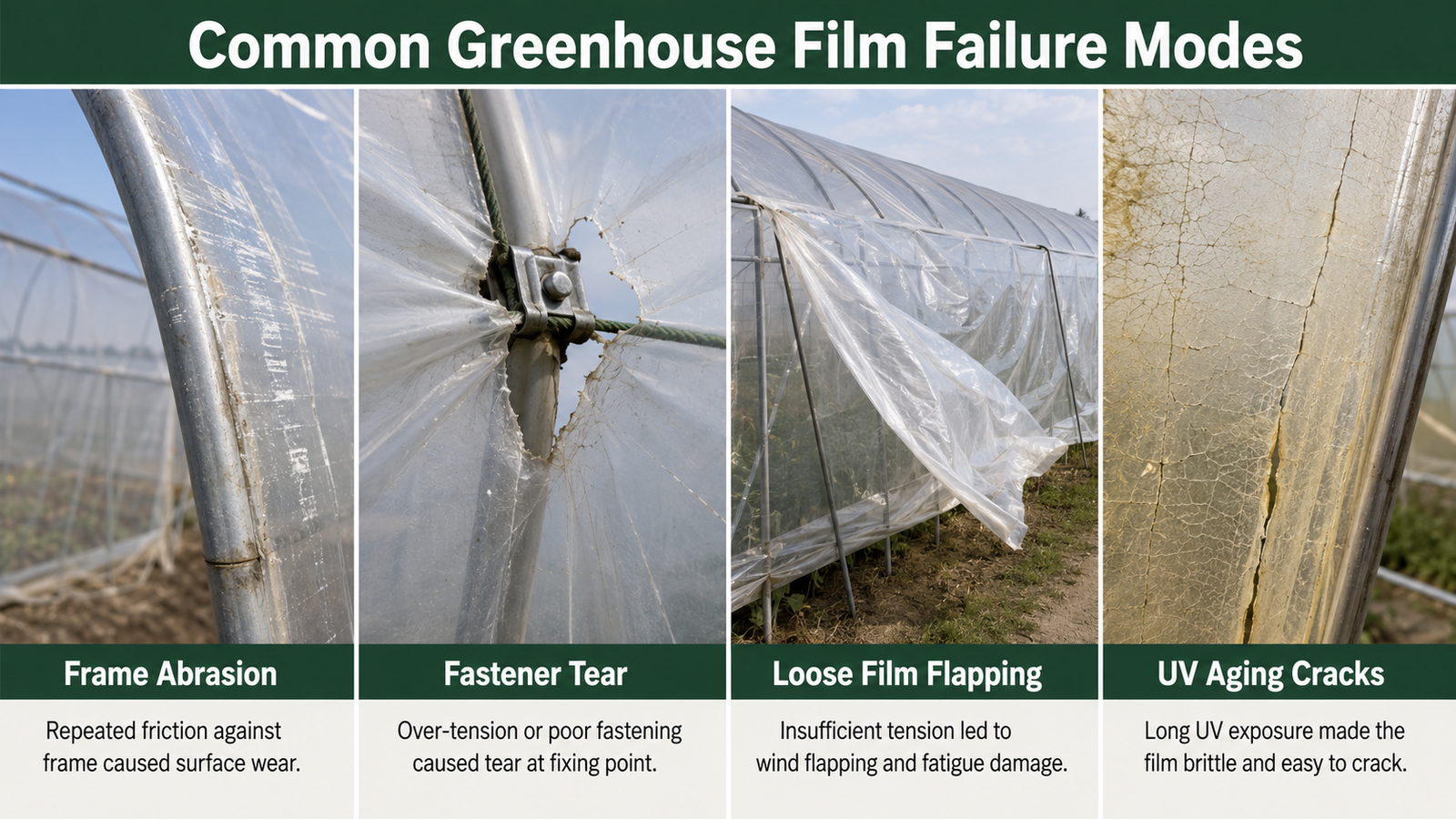
Why Greenhouse Plastic Fails Early
When a greenhouse cover fails earlier than expected, the cause is often one or more of the following:
- The wrong film grade was purchased. Construction sheeting may look similar but lack the formulation required for long outdoor agricultural use.
- UV stabilization did not match the exposure. Thickness cannot compensate for unsuitable UV protection.
- The film rubbed against the frame. Repeated movement concentrates damage at contact points.
- The cover was installed too loose or too tight. Loose film flaps; excessive tension concentrates stress.
- Fasteners or edges damaged the material. Small cuts can propagate under wind movement.
- The structural load exceeded the design. Film thickness does not make an inadequate frame safe.
- The wrong side faced inward. Some functional surfaces must be oriented correctly for anti-drip performance.
- The buyer relied on a thickness label instead of a technical specification.
Before replacing a failed cover with a thicker one, identify the failure mode. Otherwise, the new film may repeat the same failure at a higher cost.
Greenhouse Film Procurement Checklist
Send the following information when requesting a quotation:
- Greenhouse type and dimensions
- Installation country and climate
- Single- or double-layer design
- Required thickness in mils and microns
- Film width, length and quantity
- Crop and growing season
- Required service period
- UV, anti-drip, anti-fog, IR, diffusion or anti-dust functions
- Required light transmission and haze
- Mechanical-property requirements
- Applicable test methods or standards
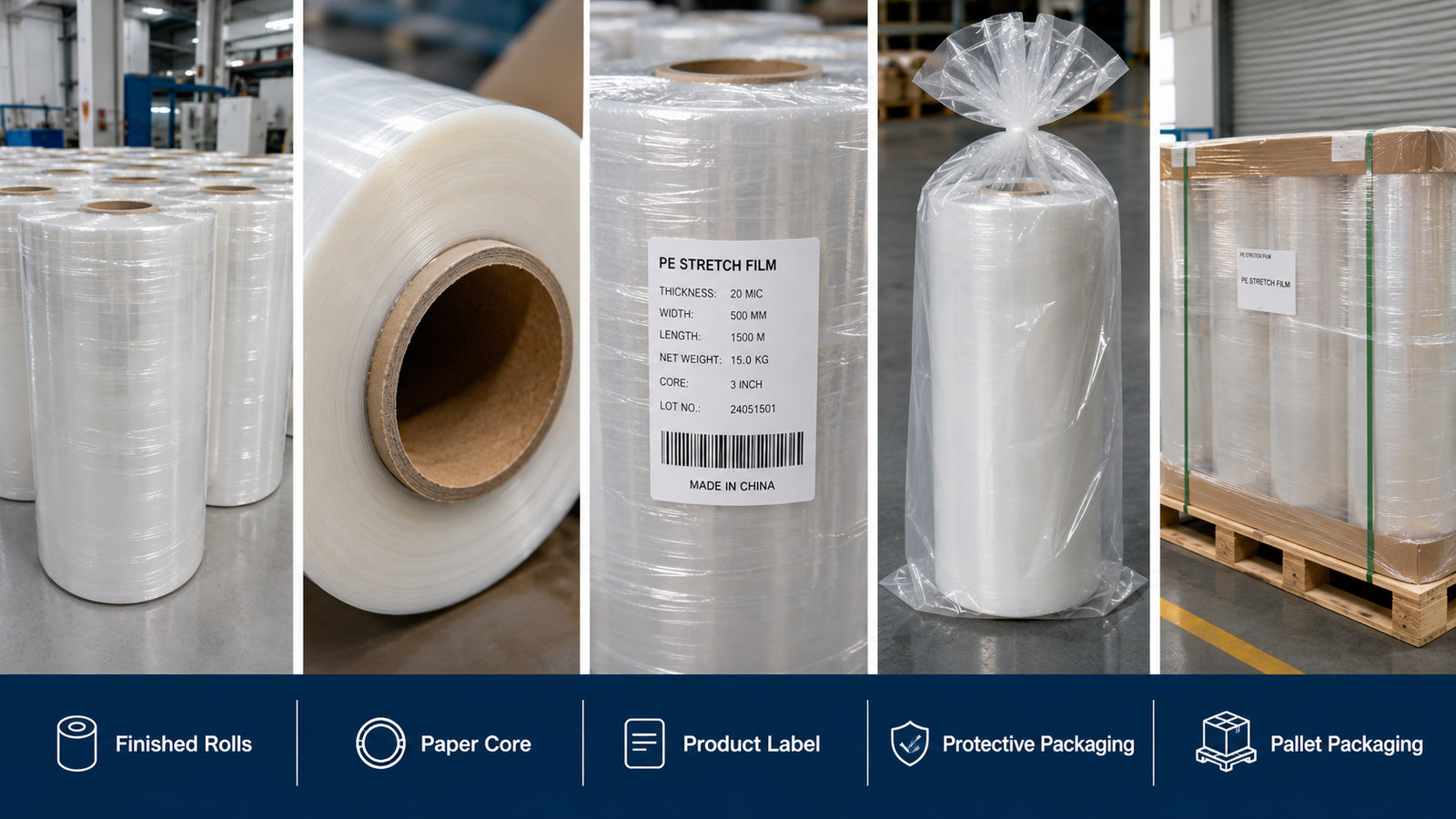
- Roll weight, core size and packing
- MOQ and delivery schedule
- Warranty conditions
For commercial projects, review the available custom greenhouse plastic roll specifications and provide the greenhouse dimensions, climate and required functions with the inquiry. That produces a more useful quotation than asking for “the thickest greenhouse plastic.”
Greenhouse Film Specification Confirmation Sheet
Use this sheet before issuing a purchase order. Complete the buyer requirements first, then ask the supplier to return the confirmed producible specification in writing. You can also download the greenhouse film specification sheet as a CSV file.
| Specification Item | Buyer Requirement | Supplier Confirmation | Evidence or Document |
|---|---|---|---|
| Project and greenhouse type | __________ | __________ | Drawing or project brief |
| Installation country, climate and elevation | __________ | __________ | Site information |
| Film construction and resin | __________ | __________ | TDS |
| Nominal thickness and controlling unit | __________ microns / mil | __________ microns / mil | Quotation and TDS |
| Thickness tolerance | __________ | __________ | Specification and inspection plan |
| Thickness method and sampling rule | __________ | __________ | Inspection procedure |
| Finished width, length and quantity | __________ | __________ | Order confirmation |
| Single or double layer | __________ | __________ | Greenhouse design |
| UV, anti-drip, anti-fog, IR and diffusion | __________ | __________ | TDS and approved sample |
| Light transmission and haze | __________ | __________ | Test report |
| Tensile, elongation and tear requirements | __________ | __________ | Test report |
| Inside/outside orientation and markings | __________ | __________ | Roll label and installation guide |
| Fold, roll weight, core and packing | __________ | __________ | Packing specification |
| Installation and fastening compatibility | __________ | __________ | Written installation conditions |
| Warranty period, exclusions and claim records | __________ | __________ | Warranty document |
| Batch inspection and traceability | __________ | __________ | COA or inspection report |
| MOQ, lead time and Incoterm | __________ | __________ | Commercial quotation |
Frequently Asked Questions
What mil plastic should I use for a greenhouse?
For most permanent or full-season greenhouses, 6 mil UV-stabilized greenhouse-grade polyethylene is the common starting point. Temporary tunnels may use 3–4 mil film, while thicker or reinforced materials should be selected for a defined mechanical requirement.
Is 4 mil plastic thick enough for a greenhouse?
It can be suitable for seasonal low tunnels, overwintering houses and temporary covers. For a permanent greenhouse, evaluate a multi-year greenhouse-grade film rather than choosing only by thickness.
Is 6 mil plastic good for a greenhouse?
Yes. Six mil, approximately 150 microns, is widely used for greenhouse coverings. Its real performance depends on UV stabilization, resin formulation, additives, installation and climate.
Is 8 mil better than 6 mil greenhouse plastic?
Not automatically. Eight mil contains more material and may provide additional mechanical durability, but it can cost more without fixing problems caused by poor UV formulation, installation, fastening or structural design.
How many microns is 6 mil greenhouse plastic?
Six mil equals 152.4 microns, commonly rounded to approximately 150 microns.
What does gauge mean for greenhouse plastic?
In the common plastic-film convention, 100 gauge equals 1 mil or 25.4 microns. Because gauge terminology can be ambiguous across industries and countries, specify the controlling thickness in microns or mil and state the permitted tolerance.
How should greenhouse film thickness be measured?
Use the agreed film-thickness method, calibrated equipment and a documented sampling plan. Measure clean, flat single-layer specimens at defined locations and report the individual readings, minimum, maximum and average. ISO 4593 covers mechanical scanning but is not suitable for embossed film; the purchase specification must define the commercial acceptance rule.
How long does 6 mil greenhouse plastic last?
There is no reliable lifespan based on thickness alone. Greenhouse-grade UV-stabilized film is designed for longer use than untreated or seasonal polyethylene, but the final service life depends on formulation, warranty conditions, sunlight, weather, installation and maintenance.
Can I use regular construction plastic on a greenhouse?
It may provide temporary coverage, but it should not be assumed to perform like greenhouse-grade film. Regular construction sheeting may not have the UV stabilization, optical properties or functional additives needed for agricultural use.
Should a greenhouse have one or two layers of plastic?
A single layer generally provides higher light transmission and simpler installation. An inflated double layer can reduce heat loss but also reduces transmitted light and requires a correctly installed blower system. Choose according to climate, heating cost and crop-light requirements.
A Manufacturer’s Perspective: Specify Performance, Not Thickness Alone
Thickness is easy to compare, which is why it often dominates buyer discussions. It is also easy to misuse.
A useful greenhouse-film quotation should connect thickness with:
- Resin and layer construction
- Verified thickness tolerance
- Mechanical properties
- Optical performance
- Functional additives
- Climate and greenhouse design
- Installation method
- Warranty conditions
For the 150 micron film described above, the quotation should identify whether the order uses the standard UV-weatherable, anti-drip/anti-fog or sulfur-resistant configuration, because each option can change the final performance and warranty conditions.
References and Sources
- NIST Guide to the SI: Conversion Factors
- USDA NRCS: Seasonal High Tunnel System for Crops
- University of Connecticut: Plastic Film Update
- University of Arkansas: Glazing Materials
- Michigan State University: Greenhouse Energy Conservation Strategies
- Oklahoma State University: Greenhouse Structures and Coverings
- University of Nevada, Reno: High Tunnel Winter Management
- ISO 4593: Plastics—Film and Sheeting—Determination of Thickness by Mechanical Scanning
- ASTM D6988: Standard Guide for Determination of Thickness of Plastic Film Test Specimens