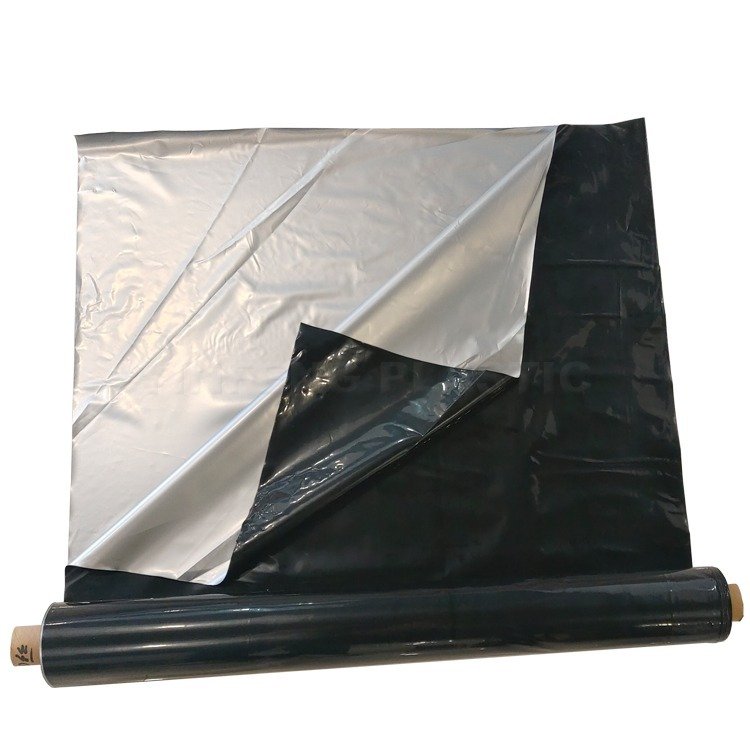
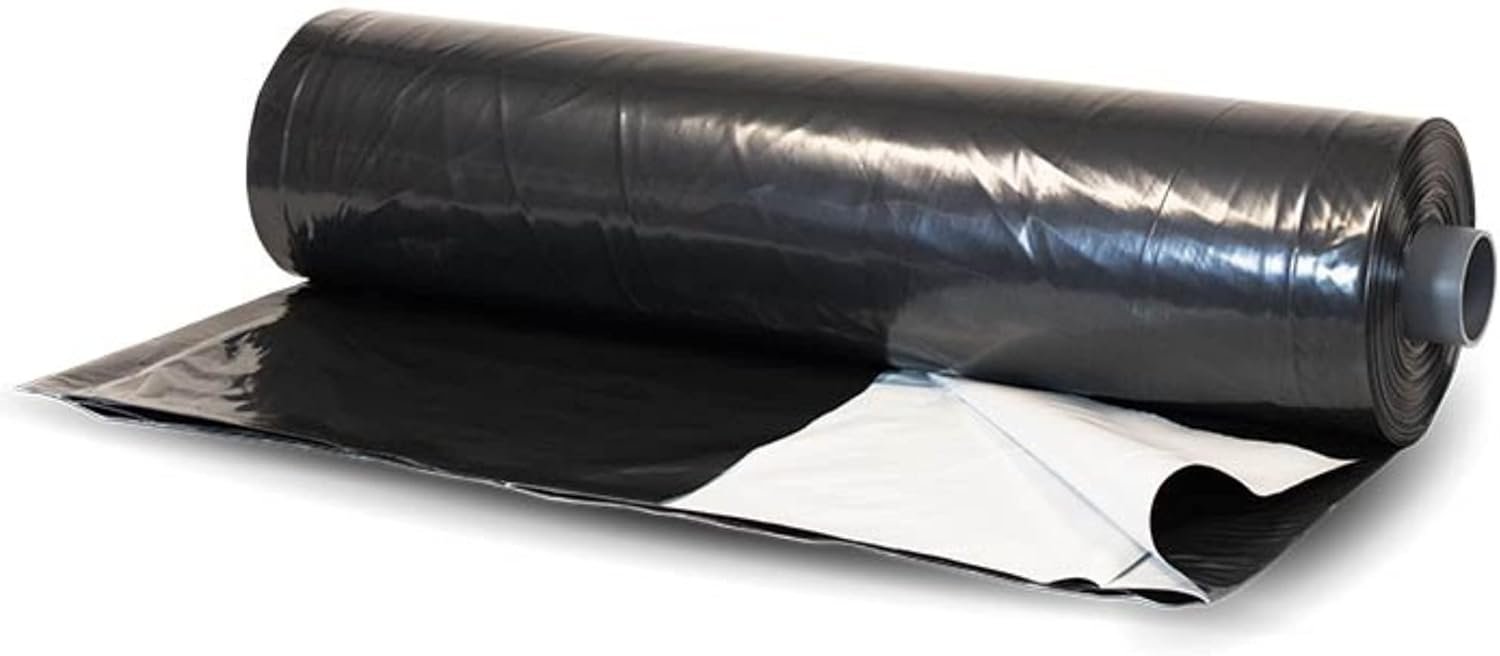
Helps suppress weeds
The opaque film blocks light and helps suppress many annual weeds. Planting holes, film edges and established perennial weeds may still need separate management.

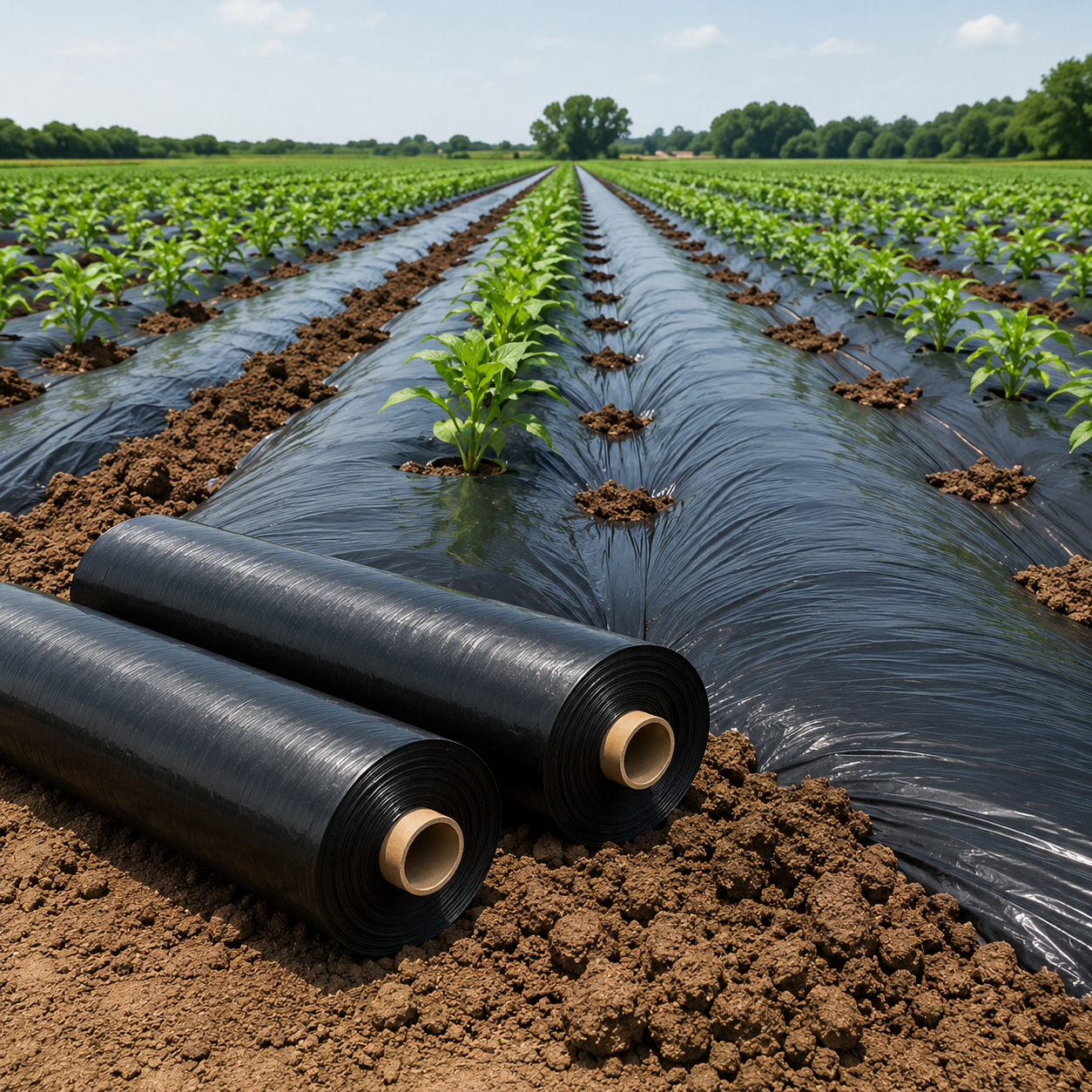
Black PE mulch for bulk and custom orders
Custom black plastic mulch film for vegetable rows, strawberry beds, greenhouse production and other commercial crop systems. Confirm the PE structure, thickness, width, roll length and planting-hole pattern before production.
Product specification
Black mulch film is not selected by color alone. Crop cycle, bed profile, installation method, planting pattern and packing requirement all affect the finished roll.
| Product | Black plastic mulch film / black PE mulch film |
|---|---|
| Material | LDPE, LLDPE or an approved PE blend based on the agreed film structure |
| Color | Opaque black |
| Thickness | [CONFIRM: actual production range in μm and mil] |
| Width | [CONFIRM: minimum and maximum roll width] |
| Roll length | [CONFIRM: standard or available length range] |
| Surface | [CONFIRM: smooth, embossed, or both] |
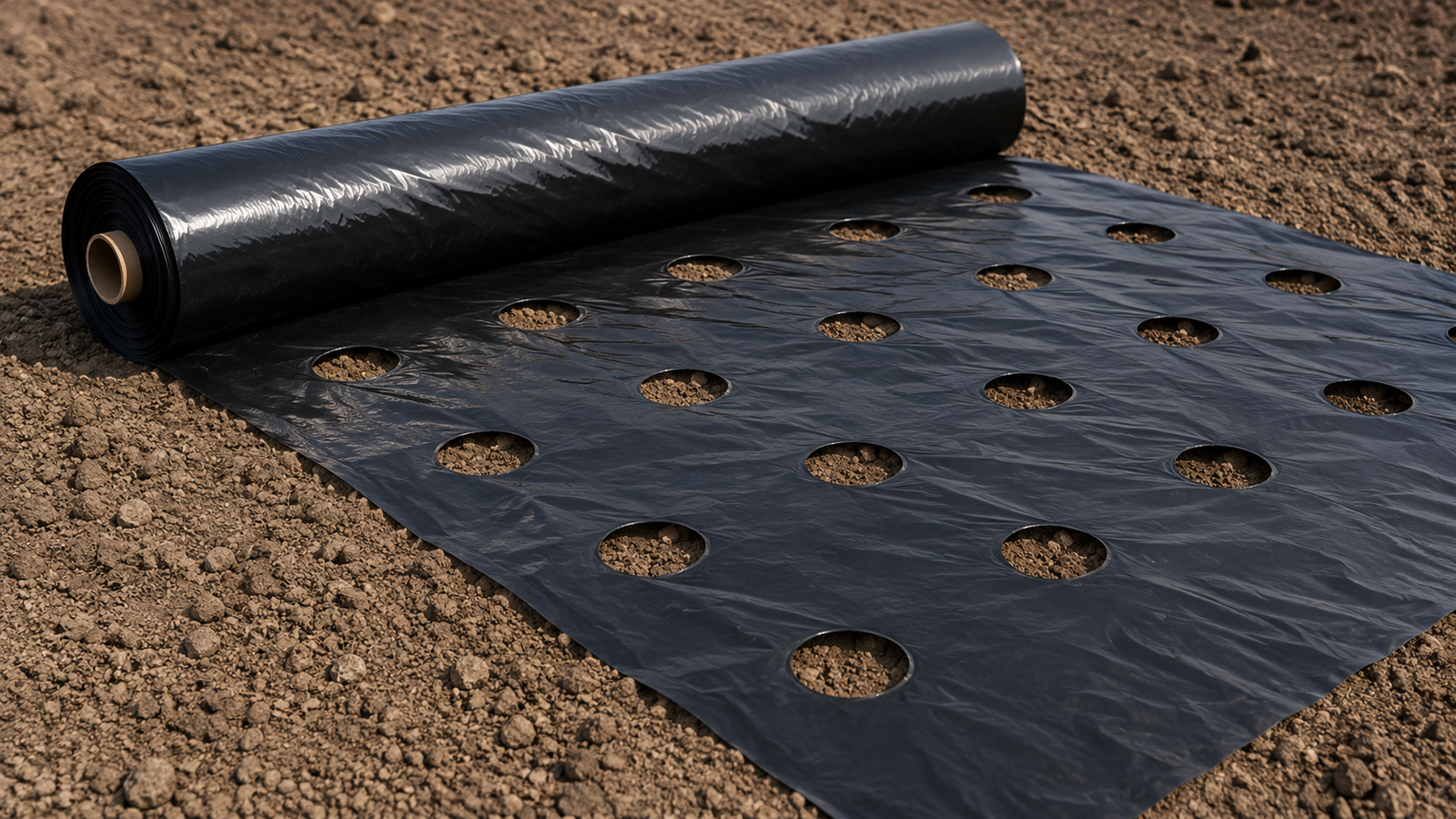
| Perforation | Optional round holes, slit holes or a crop-specific pattern after drawing approval |
| Core | [CONFIRM: paper/plastic core and available inner diameters] |
| Packing | Protective roll wrapping; woven bag, label and pallet options subject to confirmation |
| MOQ | [CONFIRM: MOQ rule or typical quantity] |
| Production lead time | [CONFIRM: typical range and conditions] |
Field function
The opaque film blocks light and helps suppress many annual weeds. Planting holes, film edges and established perennial weeds may still need separate management.
Covering the bed helps reduce direct moisture loss from exposed soil. Irrigation layout and field conditions still determine the actual water-management result.
Black film absorbs solar radiation and can warm the upper soil layer. The effect varies with climate, season, soil, film contact and crop canopy.
The film separates crop foliage and fruit from exposed soil, helping maintain a cleaner planting surface in strawberry, melon and vegetable production.
Specification review
A usable quotation needs more than the crop name. These inputs determine material use, rewinding, perforation, packing and production feasibility.
Commercial applications
The same black film specification is not automatically suitable for every bed, machine or crop cycle.
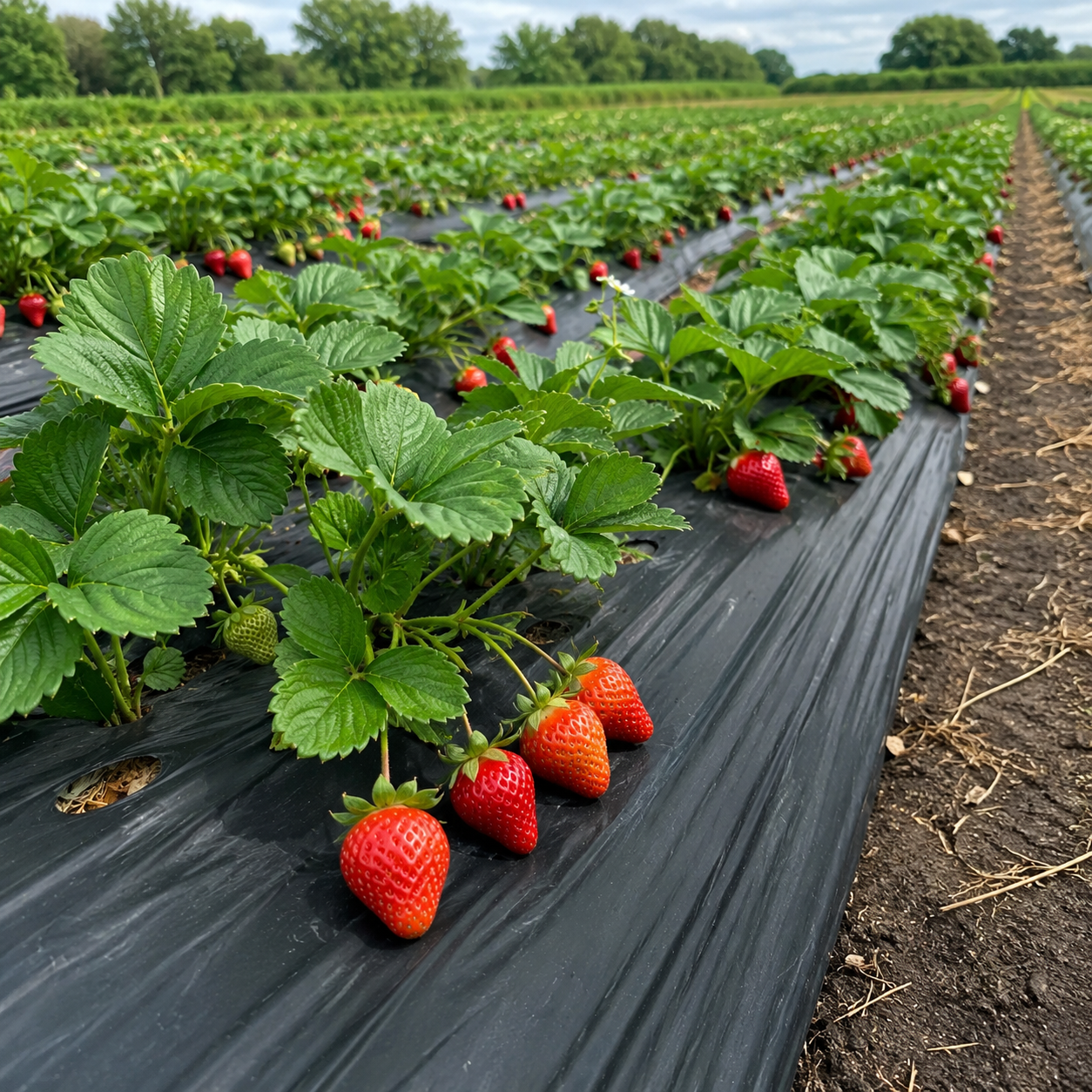
Film width should match the bed profile and anchoring margin. Hole layout must follow row count and plant spacing, not a generic pattern.
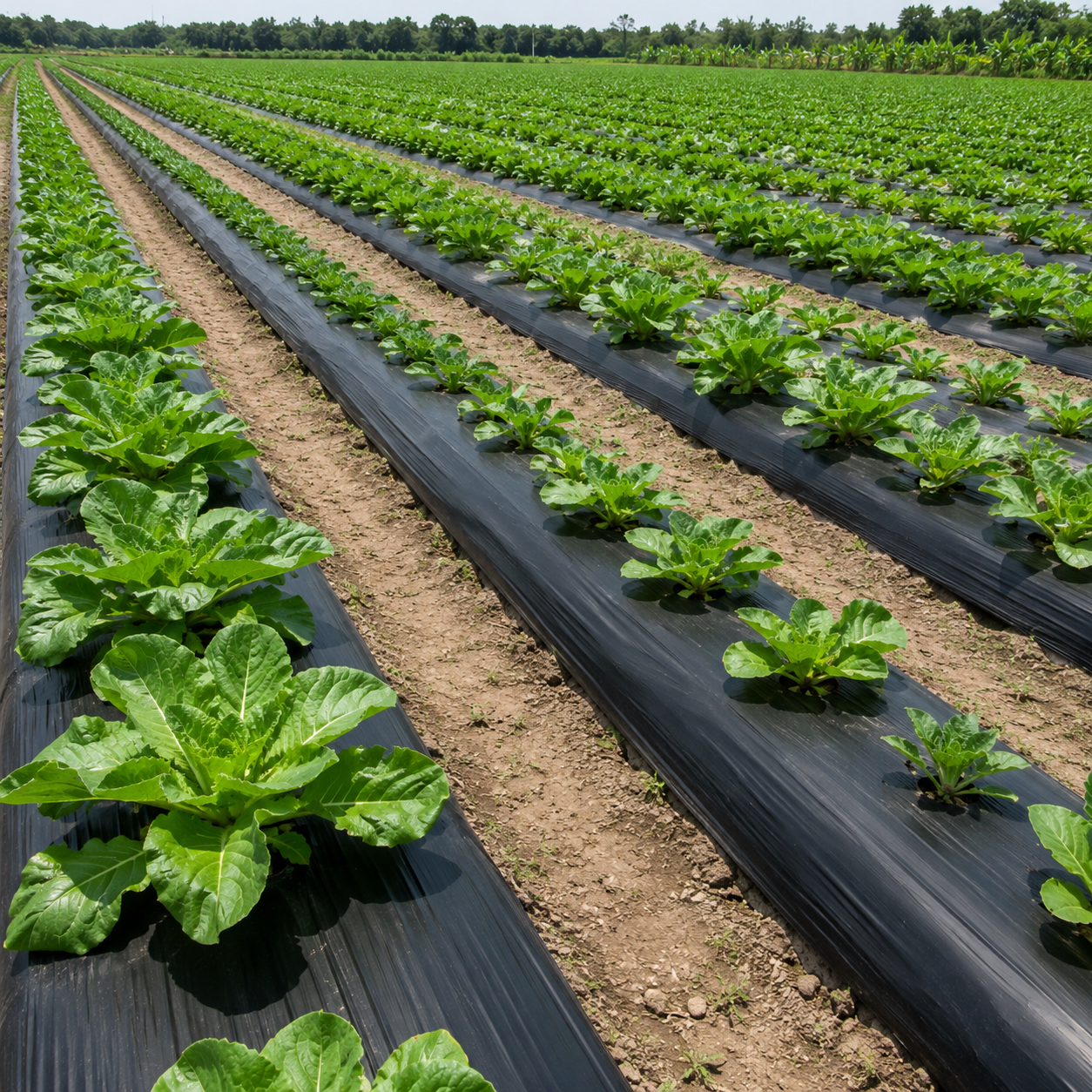
Specify the expected crop cycle, laying method and bed dimensions. Roll size can be planned around field handling and equipment limits.
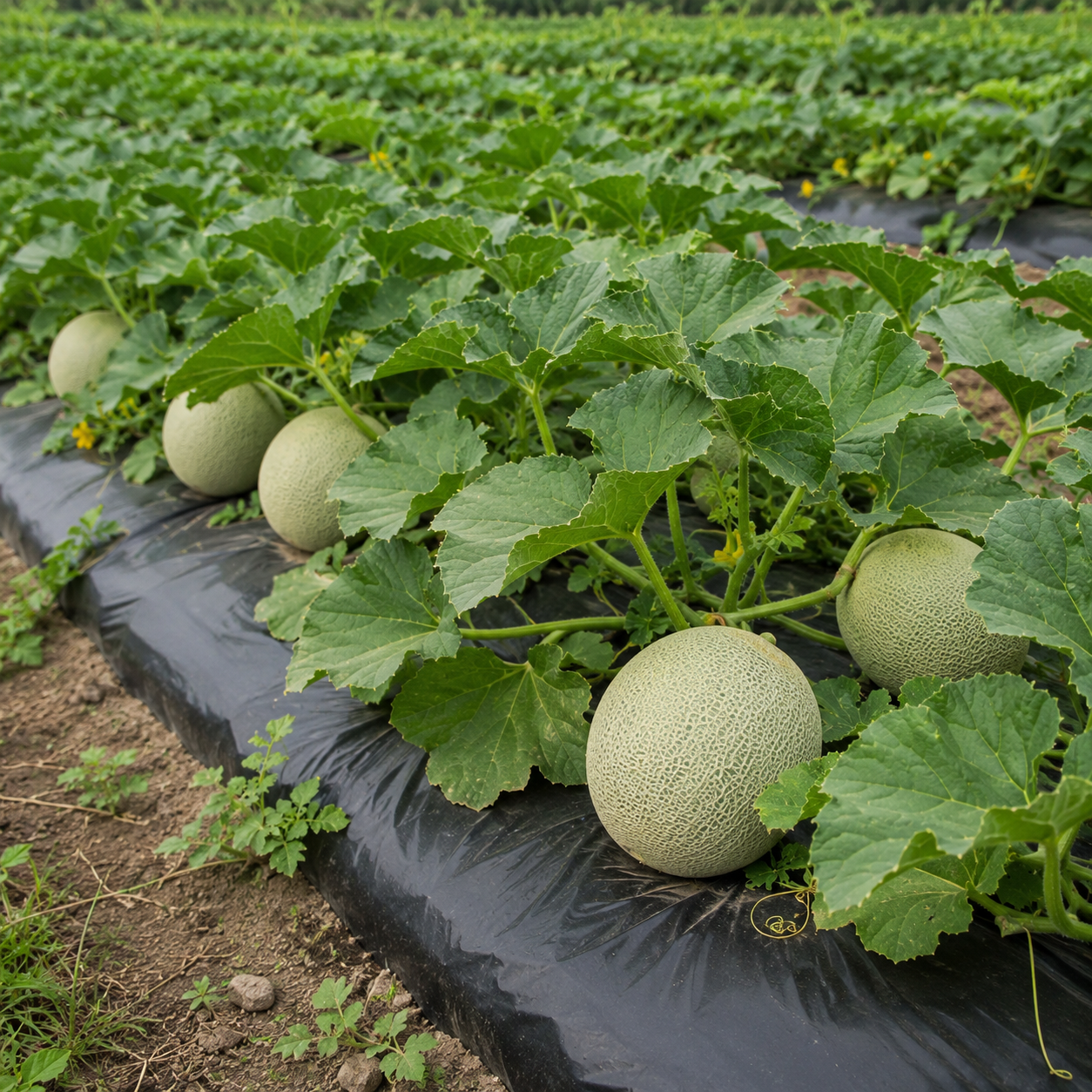
Confirm whether the film requires pre-punched holes and how irrigation lines will sit under the mulch before the pattern is approved.
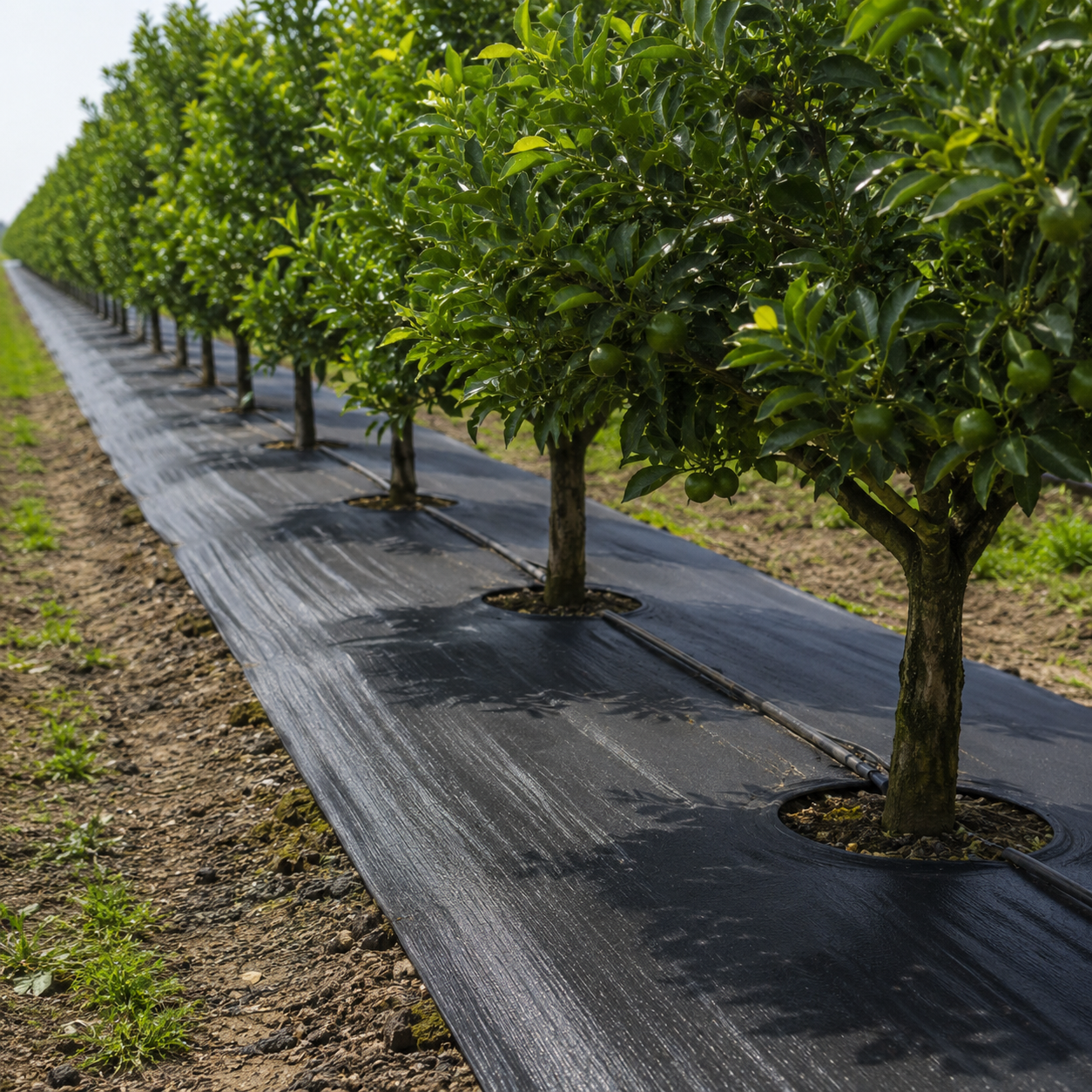
Indoor bed dimensions, irrigation configuration and manual or mechanical installation should be included in the specification review.
Production evidence
Replace generic quality claims with records and checks that a buyer can request for the actual order.
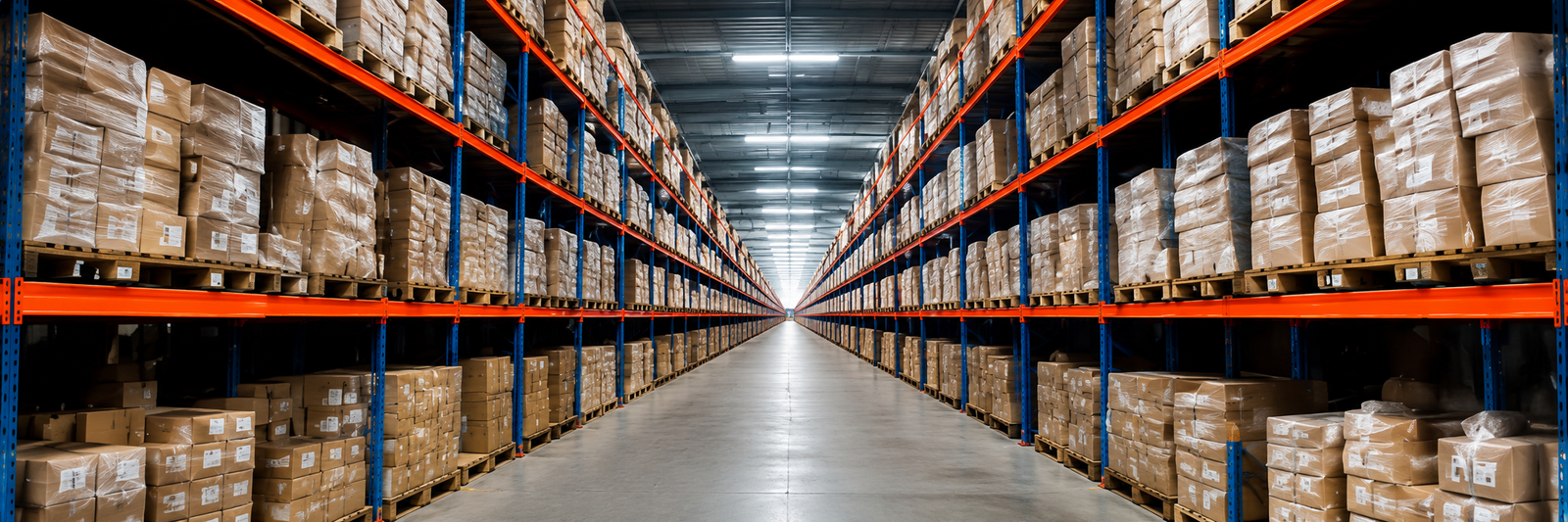
Confirm the agreed PE structure, color, dimensions, winding direction, perforation drawing, core and packing before the run.
Check film appearance and sample thickness and width against the production specification at defined stages.
Verify roll formation and, where ordered, the hole diameter, row layout and repeated spacing against the approved drawing.
Confirm roll identification, weight or length where applicable, labels, protective wrapping and pallet requirement.
[CONFIRM: list only documents you can genuinely supply, such as packing list, lot record, COA or inspection report.]
Request for quotation
Send the intended application and as many confirmed dimensions as possible. The team can identify missing inputs before preparing the quotation.
Set the form’s default product value to Black Mulch Film. Rename “Estimated Quantit” to “Estimated Quantity”.
Buyer questions
Short answers about material, weed suppression, dimensions, perforation and quotation inputs.
It is used to cover crop beds and rows, helping suppress many annual weeds, reduce direct soil-surface evaporation, influence soil temperature and keep the growing surface cleaner.
The conventional product is manufactured from an LDPE, LLDPE or approved PE blend according to the agreed structure. If a biodegradable film is required, it must be specified separately because it uses a different material system.
No. Its opaque surface helps suppress many annual weeds by blocking light, but weeds may still emerge through planting holes and film edges. Established perennial weeds may require additional management.
Thickness depends on crop cycle, field conditions, laying method and removal plan. Width should include the bed top, both sides and enough edge material for anchoring. Send the bed profile and equipment limits for review.
Subject to production confirmation, the hole shape, diameter, number of rows, row spacing and plant spacing can be produced from an approved drawing.
Provide crop and application, material requirement, thickness, width, roll length or weight, core, perforation drawing, packing, quantity, destination port and required delivery date.
Material structure, dimensions, total material volume, custom perforation, printing, packing and production schedule can all affect MOQ and lead time. Both should be confirmed for the final specification.