
Why Stretch Wrap Keeps Breaking: Film, Wrapper and Load Checks
When stretch wrap keeps breaking, locate where the damage starts before changing the film. Check the roll and its unwinding, the wrapper's film path, the span from the exit roller to the load, and the point where film meets a corner or projection. Then compare the proposed correction under recorded conditions. A break can involve the film, the equipment, the load or their combination.
Stopping breaks is only part of the result. The wrapped load must still meet the agreed containment (restraint provided by the applied film) and package-damage requirements. This guide helps packaging teams gather useful evidence and buyers request a suitable film trial; it does not replace the operating or service manual for a particular wrapper.
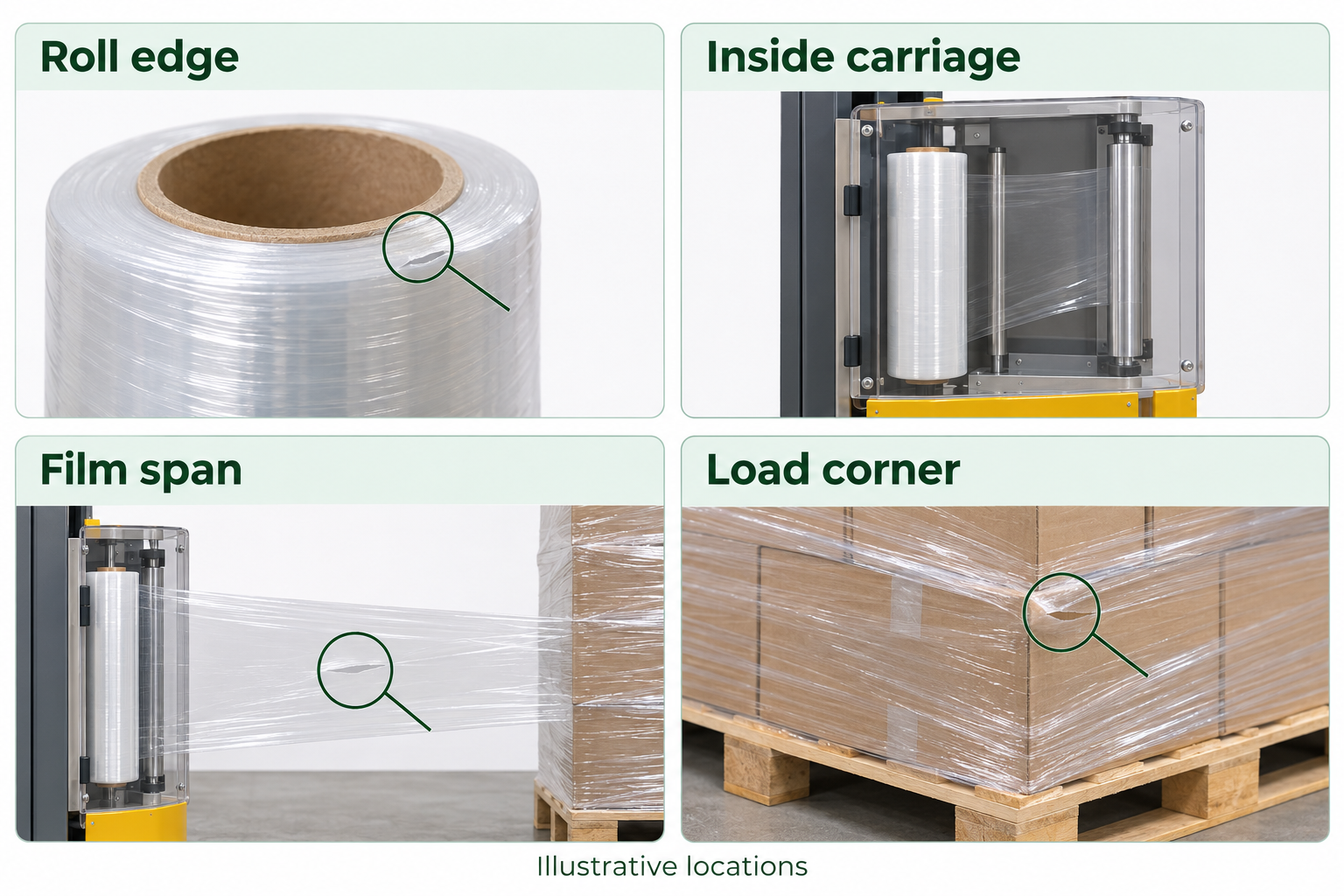
Locate the first damage, not just the final split
A small cut can become a large tear as the web moves. Record the earliest damage you can observe safely, its position across the film, and the stage of the wrapping cycle. Note whether it repeats at a particular load corner, carriage height or point in the cycle.
The Orion RTC manual's film-break troubleshooting tables separate breaks inside the carriage from those between the last roller and the load. Use the location to choose the next check, then compare what happens after the identified condition is corrected.
| Observation | Next check | Verification decision |
|---|---|---|
| A visible edge nick is present on a newly fitted reel; tearing begins as that edge unwinds. | Keep the reel identity and inspect handling damage, mounting and the unwinding path using the approved procedure. | Compare a sound, correctly specified reel. Escalate a recurring pattern with samples; do not assume a resin defect. |
| Film is intact entering the carriage but damage appears before it exits. | Check threading against the model's diagram; have authorized personnel assess film-contact surfaces and grade compatibility. | Resolve the identified path or equipment issue before attributing the outcome to a different film. |
| Film passes through the carriage but breaks in the free span before reaching the load. | Record any jerky feed or abrupt tightening and its cycle stage; review the delivery setup with the film and equipment suppliers. | Record the correction and reassess the wrapped load, rather than accepting lower force solely because breaks stop. |
| A hole starts where the web contacts the same projecting corner. | Review that contact point, load arrangement, protection and the proposed film's puncture behavior. | Trial the agreed combination on representative loads and check both damage and retained restraint. |
Keep unexpected breaks separate from an automatic machine's intended end-of-cycle cut. If the problem occurs during film capture, release or restart, include that stage in the service record. An alarm is also not a material diagnosis: some machines use a combined end-of-roll or broken-film message. Record the actual web condition and the machine message separately.
Reach a safe state specified by the equipment manufacturer before inspection or rethreading; keep maintenance and adjustments with trained, authorized personnel.
Check roll condition and identity before blaming thickness
Record the grade, supplier, batch or roll reference, nominal thickness, width and core details. Compare the label with the approved order. A different reel can have the same apparent size while differing in construction, usable quantity, winding or suitability for the delivery system.
Look for damage to the edges or core, an uneven roll profile and material that catches during unwinding. Preserve a safely obtained sample showing the affected edge and identify its direction. Lantech's film-break checklist includes mishandled rolls, threading and contact surfaces alongside load hazards.
Visible irregularities deserve investigation, but a photograph cannot reliably distinguish manufacturing variation from storage, handling or equipment damage. If a sound reel of the same approved grade runs differently, that comparison narrows the inquiry. It does not prove why the first reel failed. Keep the failed reel's identity and the conditions of both runs.
Use the stretch-wrap thickness and gauge guide when comparing units and tolerances. Choosing a thicker label is not a substitute for checking the actual failure or the grade's suitability.
Review the film path and application settings together
Use the threading diagram for the actual wrapper and carriage. Check the intended route, film orientation and permitted roll fit. Do not bypass a roller to keep production running: changing the path also changes how the system delivers film. The hand-versus-machine guide covers roll and carriage compatibility.
Raised damage, contamination or wear on a contact surface can initiate tearing. IPG's automatic-wrapper maintenance checklist includes pre-stretch rollers, idlers and clamps. Use this as a reason to request the appropriate inspection, not as a universal cleaning, polishing or repair procedure.
Keep pre-stretch and force applied to the load separate. A powered pre-stretch carriage extends film between its stretching rollers before delivery to the load; force-to-load concerns how it is applied around the package. A laboratory elongation-at-break figure does not establish a successful working setting. Ask whether the proposed grade suits the wrapper's stretching system and intended operating conditions.
Record the setting names and units shown by the actual machine, rather than sending a number such as “tension 40” without context. Include the recipe or program reference and identify any recent change. A value on one carriage's display is not automatically comparable with a value on another system, and there is no universal setting for all films and loads.
For manual wrapping, record the dispenser and application method instead of borrowing machine settings. IPG's application reminders emphasize even manual application and equipment condition. Abrupt or inconsistent pulling should be reviewed with the method, roll and load; it cannot be assessed from thickness alone.

Inspect where the film meets the load and pallet
Review the loaded shape, including protruding product, uneven layers, exposed pallet features and corners. Locate the first contact damage rather than assuming the biggest final split marks the cause. If edge protection or a changed arrangement is proposed, include it in the trial record.
A projection pushing through intact film is a puncture problem; an existing nick spreading across the web is tear propagation. They can occur together, but they are different properties. The cast-versus-blown guide explains why neither the manufacturing label nor one generic strength claim resolves both.
Film force also affects the packages underneath. Reducing it may limit breaks, while changing restraint; increasing it may deform a sensitive carton or unstable stack. Lantech's discussion of load-related breaks connects these adjustments to containment. Recheck the complete package after a change.
Verify the correction against a recorded baseline
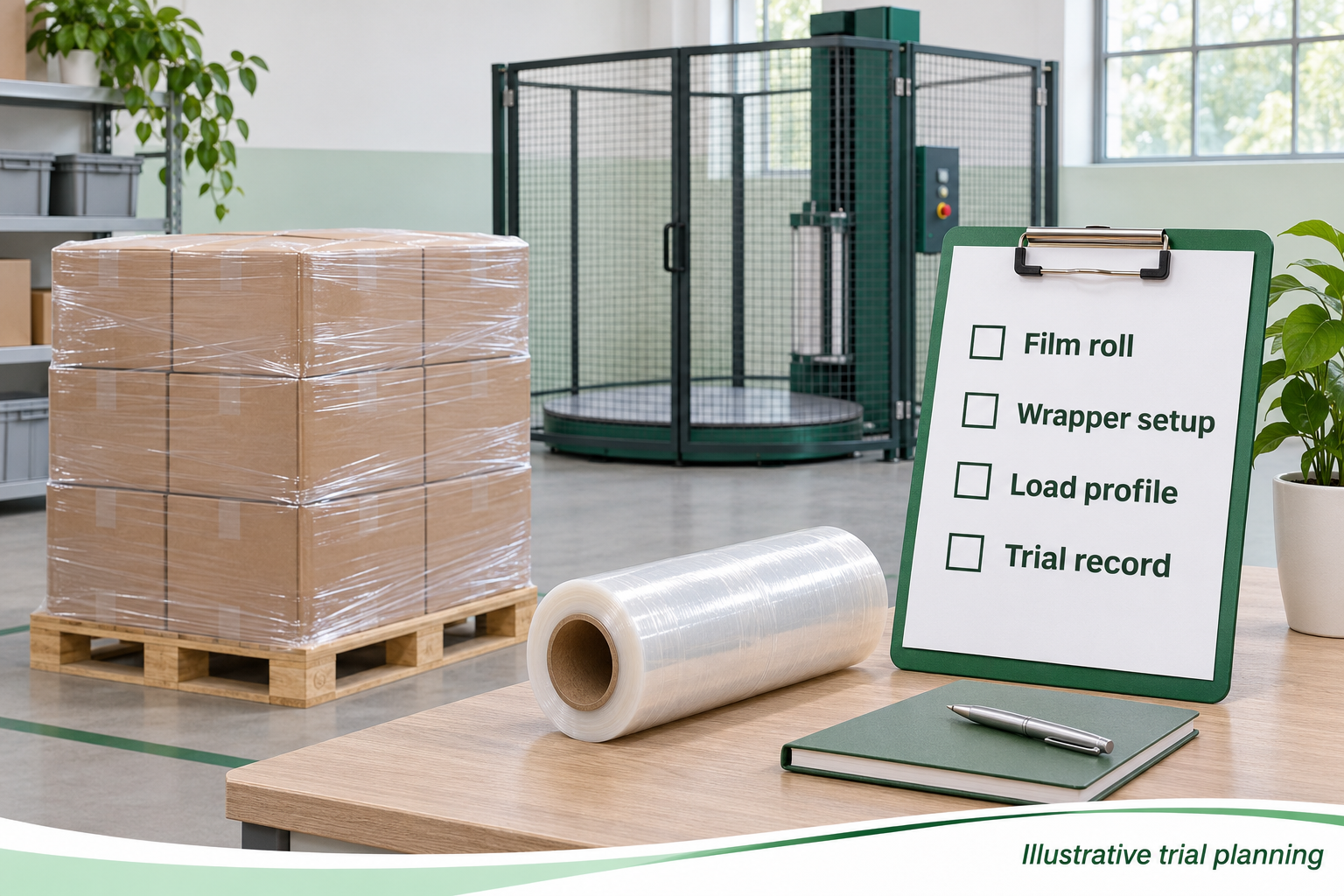
Begin with a defined run: the film and reel identity, wrapper or hand method, representative loads, wrapping arrangement and applicable settings. Agree what constitutes an accepted load and who will assess it. Record the observed starting problem before changing several things at once.
- Resolve an identified condition. Correct a damaged or mismatched roll, inappropriate threading or equipment issue through the approved process. Record what changed and repeat the relevant observations.
- Qualify a candidate grade if needed. Have the supplier propose a film for the real load and delivery system. Operate each candidate within its suitable range. If settings change with the film, identify the result as a comparison of documented wrapping processes.
- Check the finished load. Assess required containment, carton deformation, contact damage and loose film, at agreed locations and times. Include the relevant holding, handling or transport assessment.
- Count the complete run. Record attempted loads, breaks, rejected attempts, rewraps and film consumed within the same boundary. Keep working time and other operating costs separate from film cost.
Raw break counts need context: a longer run creates more opportunities for a break. For an illustrative record, two breaks during twenty attempted loads equals 0.10 breaks per attempted load. It does not mean that 10% of loads failed: both breaks might occur on one load. Do not mix that measure with the number of loads that required rewrapping.
Separate application failure from damage found later. If the film ran without interruption but a load arrives loose, retain the wrapping record and investigate the intervening settling, storage and handling conditions. That is a different observation from a web snapping inside the carriage.
Include waste consistently when using the existing film-cost-per-accepted-pallet calculation. A short run with no breaks helps evaluate the proposed correction; it does not prove transport performance or guarantee future production.
Send the evidence needed for a useful film proposal
A request for “stronger film” leaves the important problem undefined. Send the current roll label or traceable sample, the application method, loaded dimensions and arrangement, and the point where damage first appears. Include safely obtained photographs and the checks already performed.
For machine use, identify the make, model, carriage and relevant operating setup. State whether the problem started with a reel change, load change or process adjustment. If records are incomplete, say which details are unknown so the supplier can separate assumptions from the proposal.
Pair a close view of the affected film with a wider view showing its location in the approved setup. Mark the film's length direction and the edge involved where practicable. Preserve traceability when sending a sample; an unlabelled scrap separated from the reel, load and operating record is much harder to interpret.
Discuss a blown stretch-film trial with TIANFENG
TIANFENG supplies blown stretch film. Share your current roll specification, load, delivery system, quantity and destination to discuss a proposed grade and sample evaluation. The bulk minimum order is 1 metric ton per individual specification. Confirm roll fit, working suitability and acceptance requirements for the proposal.
Review blown stretch-film supply options →Stretch-wrap breakage FAQ
Will thicker stretch wrap stop the breaks?
It might change the result, but it cannot correct every damaged roll, unsuitable film path or load projection. Identify the failure first, then compare a suitable grade against the required package result.
If another reel runs correctly, was the first film defective?
The comparison is useful evidence, but not a complete diagnosis. Confirm grade and setup consistency, preserve the reel reference and affected sample, and review possible handling, winding or material differences with the supplier.
Is a load acceptable once the film stops breaking?
It still needs the agreed containment, damage and handling checks. A lower-force setup can run without breaks while delivering a different package result.
Technical references
These sources support the diagnostic distinctions. Equipment-specific settings and other suppliers' film results are not TIANFENG specifications.
- Orion RTC manual: film-break locations and model-specific service checks.
- Lantech: load, roll, threading and film-contact checks.
- Lantech: load-profile damage and the containment tradeoff.
- IPG: equipment-condition and benchmark inspection fields.
- IPG Stretch Smarter, page 9: application and equipment reminders.